
1. INTRODUCTION
“No one is coming to save us – we have to figure it out together.” That striking reminder set the emotional and intellectual tone at the sixth edition of the RBC Susty Dialogue Series, held on November 20th, 2025 at Baraza Media Lab. Hosted by Responsible Business Consulting (RBC), the evening brought together professionals from corporate spaces, social enterprises, development networks, grassroots organisations, and the wider sustainability ecosystem. Their shared mission: to explore how decent work and dignified livelihoods can be strengthened through meaningful social sustainability. It wasn’t merely an event – it was an invitation to confront reality, rethink responsibility, and recommit to people.
Opening the session, moderator Susan Njoroge, Managing Director at RBC, anchored the room in a simple but transformative truth: progress is never linear, and no organisation thrives in isolation. She challenged participants to candidly reflect on the trajectory of their businesses, their sectors, and the country as a whole. With her characteristic warmth, she reminded everyone that networks are not luxuries – they are the lifeblood of growth. “No one has all the answers,” she emphasised. “We learn with people, not away from them.” What emerged from her opening remarks was a call to collective intelligence, peer learning, and shared responsibility for shaping sustainable futures.
The panel discussion deepened the night’s purpose with a powerful, reality-anchored conversation. The speakers – Judy Njino Executive Director, UN Global Compact Network Kenya, Bernard Outah, Regional DirectorWorld Fair Trade Organisation Africa & Middle East, and Bernard Wekulo, Group HR Leader, Industrial Promotion Services under the Aga Khan Development Network – unpacked what social sustainability actually means where it matters most: in workplaces, value chains, communities, and people’s lived experience.
What followed moved the evening from insight to introspection. Participants engaged in structured breakout conversations designed to push the dialogue from theory into lived practice. Participants were divided into three groups, each reflecting on a core question anchored in the realities of social sustainability:
- What strategies can businesses use to meaningfully engage communities and vulnerable groups in their social sustainability efforts?
Group - What practical incentives would make your organization invest more seriously in social sustainability?
- In your own workplaces, what individual or team behaviors can significantly advance social sustainability – and which ones can we start practicing immediately?
The evening closed with reflections from the panellists – and a renewed call to action. By the end of the night, one truth was unmistakable: decent work and dignified livelihoods do not emerge from policy statements – they are shaped in everyday decisions, behaviors, structures, power dynamics, community relationships, and cultural mindsets. Social sustainability isn’t a project or a performance. It is a practice. It is a posture. And most importantly – it is about people
2. PANEL CONVERSATION
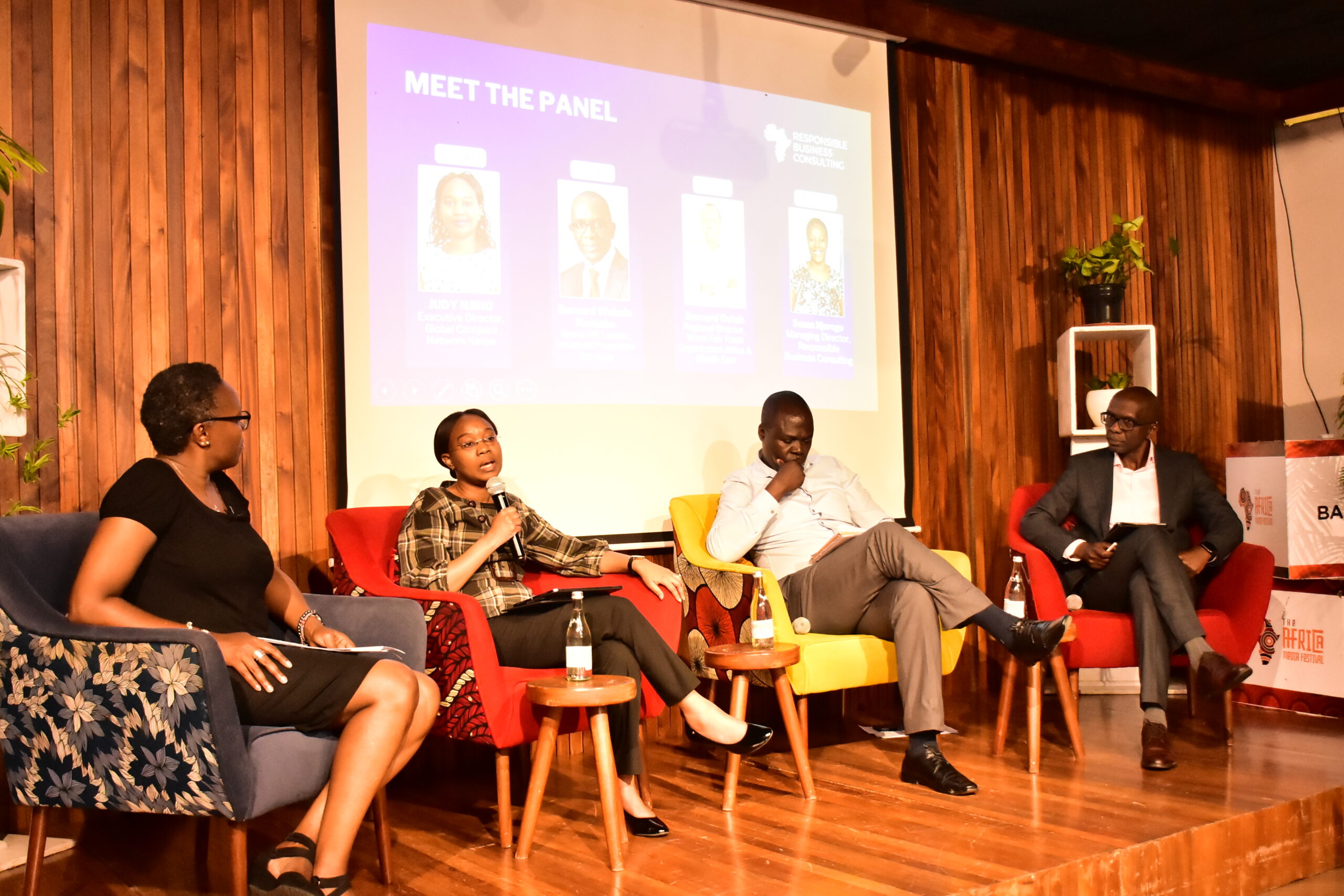
Panellists:
- Judy Njino, Executive Director, Global Compact Network Kenya
- Bernard Outah, Regional Director World Fair Trade Organisation Africa & Middle East
- Bernard Wekulo Nasokho, Group HR Leader, Industrial Promotion Services (IPS)
- Moderator: Susan Njoroge, MD Responsible Business Consulting, CISL Fellow
Question:
Global Impact has six sustainability pillars; what does social impact actually mean?
One of the panellists explained that she had been a sustainability practitioner for the last 13 years, and she began by thanking Susan for bringing together people for this important conversation. She noted that the UN Global Compact is the biggest network of the UN, and she emphasized that it puts forth 10 principles for companies who want to do good, stating that these principles are the baseline responsibilities available to any company that wants to advance their social responsibility. She explained that social responsibility and sustainability are about how companies can take responsibility for the impact of their decisions and actions on people.
She added that this responsibility is guided by ethical business conduct, complying with the laws, meeting the expectations of stakeholders in the marketplace, and ensuring that business practices align with societal values. She highlighted that business is part of society and cannot divorce itself from society, stressing that companies rely on people and therefore cannot afford not to pay attention to their impact. She said this includes showing what the impact looks like and working to make sure businesses are impactful and people are protected at the very least.
Question:
Could you tell us what Fair Trade is and how it ensures social and developmental impact?
When asked about Fair Trade, one of the panellists agreed with a previous speaker and provided further context, explaining that Fair Trade focuses on two main principles: trade and fairness. They elaborated that the central question is how trade can be made fair. They explained that Fair Trade emphasises putting people and the planet first, ahead of profit, acknowledging that while profit is important, social and developmental impact must not be overlooked. They described the World Fair Trade Organisation (WFTO) as a network of social enterprises that engage directly with grassroots actors such as producers, workers, and artisans, bringing all these stakeholders together with the purpose of trading responsibly while challenging inequities.
They highlighted that what is crucial is ensuring that the people involved in the sector are protected and empowered to make their work possible. Guided by ten principles, which they refer to as the “ten commandments,” the WFTO emphasises decent and healthy working conditions, fair prices and wages, sustainable production practices that safeguard the environment, long-term trading partnerships, and adherence to social, economic, and environmental standards. The panellist also noted that the organisation’s major focus is small businesses, and there is a clear reason for this emphasis, given that supporting small enterprises has significant ripple effects on communities and the broader economy.
Question:
How does Industrial Promotion Services operate, and how does social sustainability manifest in your organization? When do these initiatives show up in practice?
A panellist explained that Industrial Promotion Services is an arm of a major development fund, operating under a larger development network. They shared that the organisation recognised the need to contribute to national development as far back as 60 years ago, shortly after independence. As a pioneer, it was among the first to create commercial enterprises, generate jobs, and positively impact communities wherever they operate. They emphasised that the organisation works to protect and care for nature, and although they do not publicise their efforts extensively, they have been consistently active for many years.
The panellist highlighted the wide range of sectors in which the organisation operates, noting its involvement across multiple industries and regions. They clarified that the organisation’s focus is not solely on commercial enterprises but also on the social and economic development of the communities where they operate, with profits being reinvested into community projects.
The panellist further explained that they aim to provide decent work while ensuring that the work does not harm anyone, incorporating safeguarding measures, fair remuneration, and livelihood improvements. They shared concrete examples, such as electrifying nine villages, promoting climate-smart agriculture to educate farmers on sustainable practices, developing health infrastructure, inviting employees to check on their well-being, adopting and funding schools, and enforcing ethics and governance, including reporting misconduct like bribery. These efforts, they noted, illustrate how social sustainability consistently shows up across the organisation’s operations.
Question:
Human rights is a big part of social sustainability. Why do companies often panic when discussing human rights?
A panellist explained that human rights have traditionally been approached as an activist agenda, and there is nothing inherently wrong with that perspective. However, when looking at the context of business, most companies generally want to do the right thing, yet they often become anxious because they do not fully understand what the human rights agenda entails and how it impacts their business. It is sometimes positioned as solely an NGO issue, which further complicates corporate engagement. The panellist noted that global annual studies conducted under the UN Global Compact reveal that among its ten principles, companies struggle the most with social rights.
Many businesses have commitments on paper but do not demonstrate how these commitments come to life, creating a gap between intention and operationalisation. Numerous companies are unclear on what is expected of them and require guidance on how to translate these commitments into practical actions. She highlighted that the sustainability landscape is shifting, with new demands for accountability, and companies are increasingly being called to account for their social impact.
Between voluntary commitments and mandated bylaws, businesses face pressure from stakeholders to demonstrate real action. From a resources perspective, implementing human rights initiatives can be challenging, and competence is also an issue, especially for small businesses that may lack capacity to act yet are among the largest contributors to the economy. The panellist emphasised that every corporate entity should respect human rights, and this is where the Global Compact provides support through programs such as accelerator initiatives – a six-month journey that guides companies through their commitments, helps them develop actionable plans, monitor effectiveness, and report progress.
She added that attention to human rights also links to market access, noting that companies not paying sufficient attention risk compromising Kenya’s competitiveness. Ultimately, social sustainability, particularly human rights, is a critical area – arguably more urgent than climate issues – and the Global Compact is positioned to help companies navigate their journey while simultaneously supporting the livelihoods of marginalised communities.
Question:
From your experience within your organisation, what are the key realities and challenges of effectively delivering and implementing social sustainability?
One panellist explained that at the core of Fair Trade is human dignity, which serves as the foundation for all social sustainability efforts. He emphasised that creating a decent work environment requires organisations to assess the extent to which they actively listen to their employees and respond to their needs. Providing decent livelihoods involves ensuring that families have real opportunities to support their children and build sustainable futures.
He noted, however, that these goals are not easy to achieve, as organisations often lack the necessary resources to implement them fully. Gender considerations also present challenges, particularly given that some groups have historically been disadvantaged. The panellist observed that there is a growing sense of awakening and awareness about these issues, and organisations must consider how to make social sustainability practices attractive and relevant for younger generations.
Question:
When we talk about social sustainability, we often use the word “dignity.” What does it actually mean in practice?
One of the panellists explained that if we were to set aside dictionary definitions and truly teach dignity, it would mean showing up without feeling as though anyone is looking down upon you. It involves people not trying to belittle or put you down, and it is reflected in how we treat one another, particularly within the employer-employee relationship. He emphasised the importance of having fair and transparent mechanisms that allow individuals to understand their opportunities, learn, and grow as better employees.
Work conditions, such as receiving the appropriate attire and not feeling marginalised or sidelined, are also critical to ensuring dignity. Allowing employees to speak up and participate meaningfully in the organisation further reinforces this principle. Beyond the workplace, dignity extends to ensuring that people have assurance that their goods and contributions are valued and that they have access to markets. Losing market access can make individuals feel as though they have lost their dignity.
Transparency and clear communication about entitlements are crucial, as many people do not understand what they are due. These practices are important not only for the immediate welfare of employees but also for the long-term aspect of livelihoods. For instance, if someone can plant and grow successfully, their children and their organisation’s future are secured. Ultimately, promoting dignity builds stronger trust within the community and reinforces social sustainability.
The second panellist highlighted that his organisation works closely with artisans and farmers, and one of the biggest challenges they face is helping these individuals avoid feeling small or marginalised. When people lack negotiation skills, necessary tools, experience, or exposure, they can be offered rates or conditions that undermine their dignity. He emphasised the importance of understanding the specific context within which these individuals operate, as failing to do so can create significant problems for the work being undertaken.
To illustrate, he shared an example from Uganda, where in a textile operation, workers returned home to find only one person in the compound, living in a small house next to the gate. They observed a traditional kettle used as a serving tray, darkened with soot, and realised that this was the individual left behind to take care of the company. He posed the critical question: what effect does such a situation have on that person’s sense of dignity and value? This example highlighted the real-life challenges of ensuring social sustainability and preserving dignity for all stakeholders involved.
Question:
When and how did we come to the point where it seems acceptable to treat people with indignity in our businesses and organisations?
One of the panellists reflected that as enterprises have grown increasingly competitive in terms of commerce, there has been a tendency to look for the next person to take advantage of. He explained that, in the context of East African capitalism, it has really become a culture of extreme competitiveness. This culture has had a profound impact on organisations and investments, making it very difficult to change mindsets that have been ingrained over time. Many people did not even realise when they stopped caring about the broader societal impact of their actions. While businesses continue to generate profits, he emphasised that the critical question remains: how much is society actually gaining in return? He highlighted that capitalism itself is one of the underlying reasons this culture of disregarding human dignity has emerged.
Another panellist added that this is essentially “capitalism on steroids,” noting that resources are not infinite, which is why checks, balances, and laws are necessary. She stressed that this is also why certain standards are now mandatory. While businesses may gain in the short term by neglecting social responsibility, they risk losing in the long term.
She pointed out that the new generation is emerging with demands for political and corporate governance that prioritisese doing the right thing, and this will become a defining feature for surviving and thriving in the marketplace. Despite the challenges, she offered hope, noting that those who undermine human dignity and societal well-being are, in effect, jeopardising their own long-term survival.
Question: In your role, and given the diversity of your organisation and its operations, how are you addressing the gender equality aspect of social sustainability?
A panellist explained that the steps taken so far are not enough, and emphasised the importance of understanding what actions are actually being implemented. He noted that his organization has ensured they gather very accurate and comprehensive information, particularly regarding how shortlists are created for recruitment and advancement.
He described their approach in other organisations, encouraging them to observe gender equality, aiming for a 50-50 balance at entry-level positions, while acknowledging that as one moves up the hierarchy, the percentage of women tends to decrease. They also review pay and promotions to ensure fairness, citing examples such as when a woman goes on maternity leave but her male colleagues are promoted, which is closely monitored. He highlighted the importance of family-friendly policies, including providing a creche for mothers within the organisation, and emphasised that these practices are being replicated across other organisations.
Targets and numbers are essential, as what is measured gets done, so they set specific targets to drive change. He further explained that fostering a culture that speaks to gender equality is critical, and when engaging with stakeholders such as women-led farm organisations, they also implement women-only training programs and vendor-sensitive extension services, ensuring that extension officers, particularly female ones, reach these women.
While acknowledging that they have not yet reached the end of the journey, he expressed pride in the small wins achieved so far, supported by numbers, and highlighted that they invite external parties to audit their progress to maintain accountability and transparency.
Question from the audience:
What has been your experience regarding companies’ buy-in when it comes to social sustainability initiatives?
Answer: One of the panellists explained that, in most cases, such decisions are made at board level, emphasising that it is a top-down process where the board establishes the rules, and people within the organization tend to adhere to them. He noted, however, that some executives do not have sufficient support, particularly when deciding whether to reinvest in social agendas or prioritise returns to shareholders, which presents a challenge. He highlighted the critical role of stakeholder activism in this context, explaining that by engaging stakeholders, companies are encouraged to lead with accountability. He also observed that the emerging generation can influence this process by using their voices and votes to hold organizations accountable, thereby strengthening buy-in for social sustainability initiatives.
3. REFLECTIONS FROM THE PANEL DISCUSSION
Moderator Susan Njoroge reflected on the panel discussion, noting that the conversation had been both inspiring and grounding. She emphasised that social sustainability is not confined to policies or isolated projects – it is embedded in daily actions, decisions, and behaviors across organisations. The discussion highlighted that creating decent work and dignified livelihoods requires intentionality, consistency, and courage, even in moments when no one is watching. From the stories shared on grassroots empowerment, Fair Trade, and organisational practices, it became clear that culture, ethics, and purpose are inseparable from sustainable business practice.
Susan also acknowledged the tensions discussed: large organisations risk performative action, while smaller enterprises often struggle to embed social values with limited resources. Yet across all examples, the key lesson was the power of deliberate, values-driven choices and clarity of purpose. Every decision – from employee engagement to community partnerships – shapes an organisation’s social footprint.
With these reflections in mind, Susan invited participants to transition into the breakout groups. She encouraged them to move beyond theoretical discussion and consider the practical implications for their own workplaces, communities, and networks. The questions provided by the panellists were framed as mirrors, prompting participants to reflect on not just what their organisations do, but what they permit, promote, and protect. This set the stage for deep, actionable conversations in the breakout sessions, connecting the insights from the panel to real-life strategies and behaviours that advance social sustainability.
4. BREAKOUTS PLENARY FEEDBACK SESSIONS
Group 1:
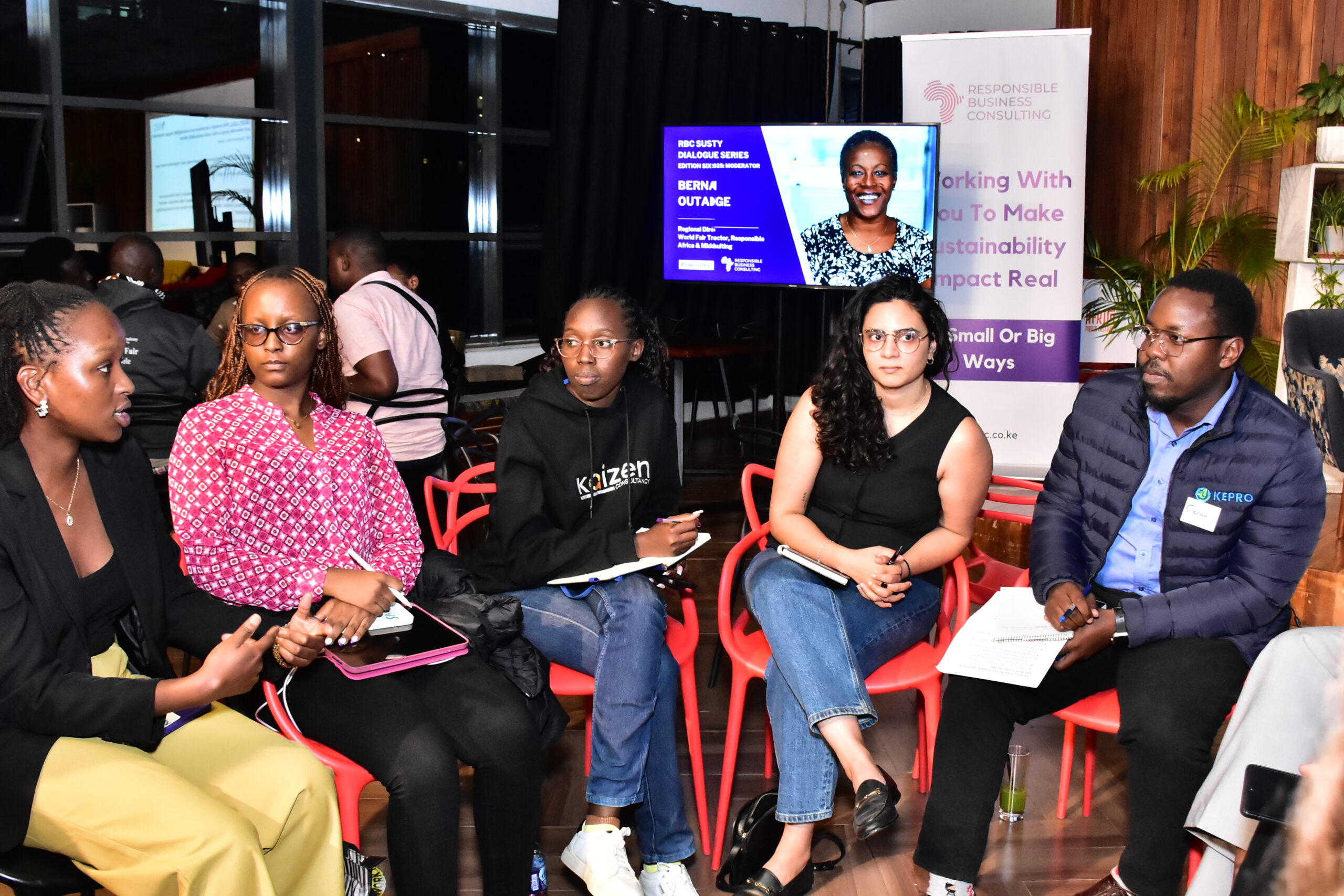
Question: What strategies can businesses use to meaningfully engage communities and vulnerable groups in their social sustainability efforts?
Points shared:
- Use Clear and Accessible Stakeholder Engagement Channels
Businesses should establish reliable communication channels within the community, such as engaging local leaders (e.g. chiefs), organising focus groups, and using culturally familiar platforms to share information. Having people on the ground ensures communication flows both ways and community voices are heard.
- Strengthen Accountability Systems
Companies must put in place systems that allow them to track and report their progress transparently. This could include regular updates to community representatives or internal mechanisms that ensure commitments made are commitments followed.
- Offer Multilingual Communication Options
Since vulnerable groups may speak different languages, businesses should ensure their communication is multilingual. Employing multilingual staff or translators ensures inclusion and prevents miscommunication.
- Integrate Community Benefit in Business Operations
Successful businesses incorporate models where part of their income directly benefits the community. For example, allocating a percentage of profits to local initiatives such as education, infrastructure, or social support ensures a shared sense of progress.
- Prioritise Fair Redistribution of Resources
Organisations should ensure that communities, especially vulnerable groups benefit from the money or resources generated through local business operations. Companies must return value to the community, not just extract it.
- Allocate a Clear Budget for Community Support
Planned and transparent budgeting for community projects shows commitment. For instance, companies like cement manufacturers may support communities by providing food, hiring locally, and offering material assistance such as clothing.
- Promote Mental Wellness and Wholeness
Businesses that support the mental well-being of both employees and community members create environments where people feel valued. This strengthens relationships and builds long-term trust.
- Maintain Continuous Engagement
Engagement should not be a one-off activity. Businesses must consistently involve the community in discussions, updates, and feedback opportunities to build sustainable relationships.
- Allocate Funds Specifically for Community Development
Proactive businesses set aside financial resources to support community initiatives, especially in vulnerable sectors such as farming or informal labour.
- Borrow Best Practices from Highly Regulated Sectors
Industries like tobacco often have strong community support frameworks. Businesses can adopt similar models for example, supporting farmers, offering training, or improving livelihoods.
- Be Proactive When Sourcing from Local Communities
Companies that rely on local suppliers or labour should ensure that these communities benefit through better working conditions, fair pay, capacity building, and long-term partnerships.
Group 2:
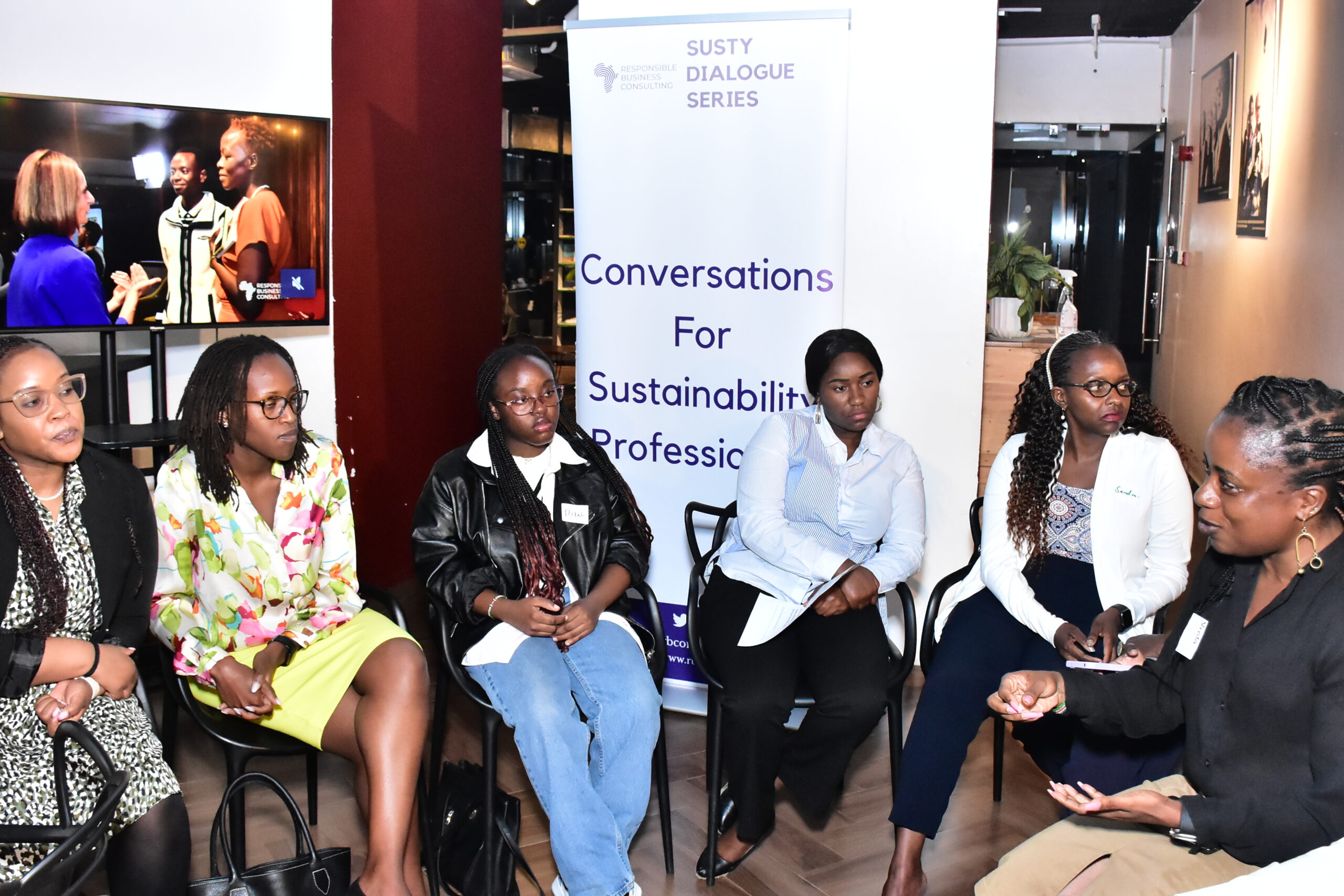
Question: What practical incentives would make your organisation invest more seriously in social sustainability?
Points shared:
- Employee Equity Opportunities
Allow employees to earn equity or allocate part of their salary toward becoming stakeholders. This builds ownership, loyalty, and long-term commitment to sustainability goals.
- Government Incentives
Access to tax breaks, grants, subsidies, or reduced regulatory fees for companies that adopt sustainable practices. These incentives must be well-designed to avoid loopholes.
- Watchdog Monitoring & Accountability
Independent organisations or rating systems that publicly highlight sustainable vs. non-sustainable companies. This “motivation and shaming” approach encourages companies to do better to maintain reputation and market trust.
- Mandatory Regulatory Requirements
Clear government regulations that require companies to meet sustainability standards. Ensures consistency and removes the option for businesses to ignore sustainability.
- Data-Driven Motivation
Providing companies with data analysis, case studies, and predictive models that show the long-term financial and environmental benefits of sustainability. When leaders see measurable ROI, adoption becomes easier.
- Market Access Advantages
Preferential access to local or international markets – especially where buyers prioritise suppliers with strong social sustainability practices. This becomes a practical motivator for companies to improve in order to remain competitive.
- Procurement Preferences
Government bodies, development partners, and large corporations offering procurement priority to companies that demonstrate strong social sustainability records. This makes sustainability a direct pathway to winning contracts.
- Certification Benefits
Simplified or subsidised access to recognised sustainability certifications that improve brand credibility and open doors to partnerships. When certifications are easier to attain, more companies are willing to invest.
- Talent Attraction andRetention Gains
A clear incentive when companies realise they can attract high-performing talent and reduce turnover by embedding strong social sustainability practices. The workforce increasingly chooses employers aligned with ethical values.
- Investor Confidence andFunding Opportunities
Investors and financial institutions offering better loan terms, investment opportunities, or lower interest rates to companies that demonstrate a measurable commitment to social sustainability. Access to capital becomes a reward for responsible practice.
Group 3:

Question:
In your own workplaces what individual or team behaviours can significantly advance social sustainability for example human rights, inclusion, workers voice, ethical conduct, community support? Which of these can we start practicing immediately?
Points shared:
- Open communication horizontally and vertically
This means communication should flow freely across all levels – between colleagues at the same level (horizontal) and between staff and management (vertical). When communication is open, transparent, and respectful, employees feel informed, heard, and valued. This reduces conflict, builds trust, and strengthens teamwork.
- Community support – volunteers in the workplace. People can speak on your behalf
Creating a workplace culture where staff volunteer together strengthens teamwork and connection to society. It also means having supportive colleagues who advocate for you, defend your rights, and stand in when you cannot speak for yourself. This builds a socially responsible and caring environment.
- Training and education – such as product handling, PPRs
Workers should receive proper education and training to improve skills, safety, and performance. Whether it is product handling, safety procedures (PPRs), or professional development, training empowers employees and reduces workplace accidents. It also promotes ethical conduct and competency.
- Involve the employees in getting paid for their original design in some projects – like design by Mo initiative
When employees contribute original ideas, creativity, or design, they should be recognised and compensated. This increases innovation, motivation, and fairness. Rewarding creativity also ensures workers feel ownership and pride in projects.
- Incentivise employees
Offering incentives such as bonuses, recognition awards, extra training opportunities, or career growth encourages good performance and loyalty. Incentives also improve morale and reduce staff turnover.
- Joining a union of choice without being singled out – can bargain collectively
Workers should be free to join any union they prefer without intimidation or discrimination. A union gives employees collective bargaining power, protects their rights, and ensures fair treatment. This is a major pillar of social sustainability and workers’ voice.
- Inclusivity that allows equal opportunity to everyone – e.g. in promotion
Inclusivity means removing bias, favouritism, and discrimination. Everyone should have a fair chance at promotions, opportunities, leadership roles, and projects. It ensures that diverse voices are represented and respected.
- Equal pay for equal work
People doing the same job should receive equal pay regardless of gender, age, tribe, disability, or background. This promotes fairness, justice, and dignity in the workplace. It also boosts employee trust and reduces inequality.
- Human rights – channels of reporting human rights abuses
Organisations should provide safe, confidential, and effective reporting channels for harassment, discrimination, exploitation, or any other form of abuse. This encourages accountability, protects vulnerable staff, and builds a culture of justice.
5. KEY TAKEAWAYS FROM THE ‘RBC SUSTY DIALOGUE SERIES’ – EDITION SIX
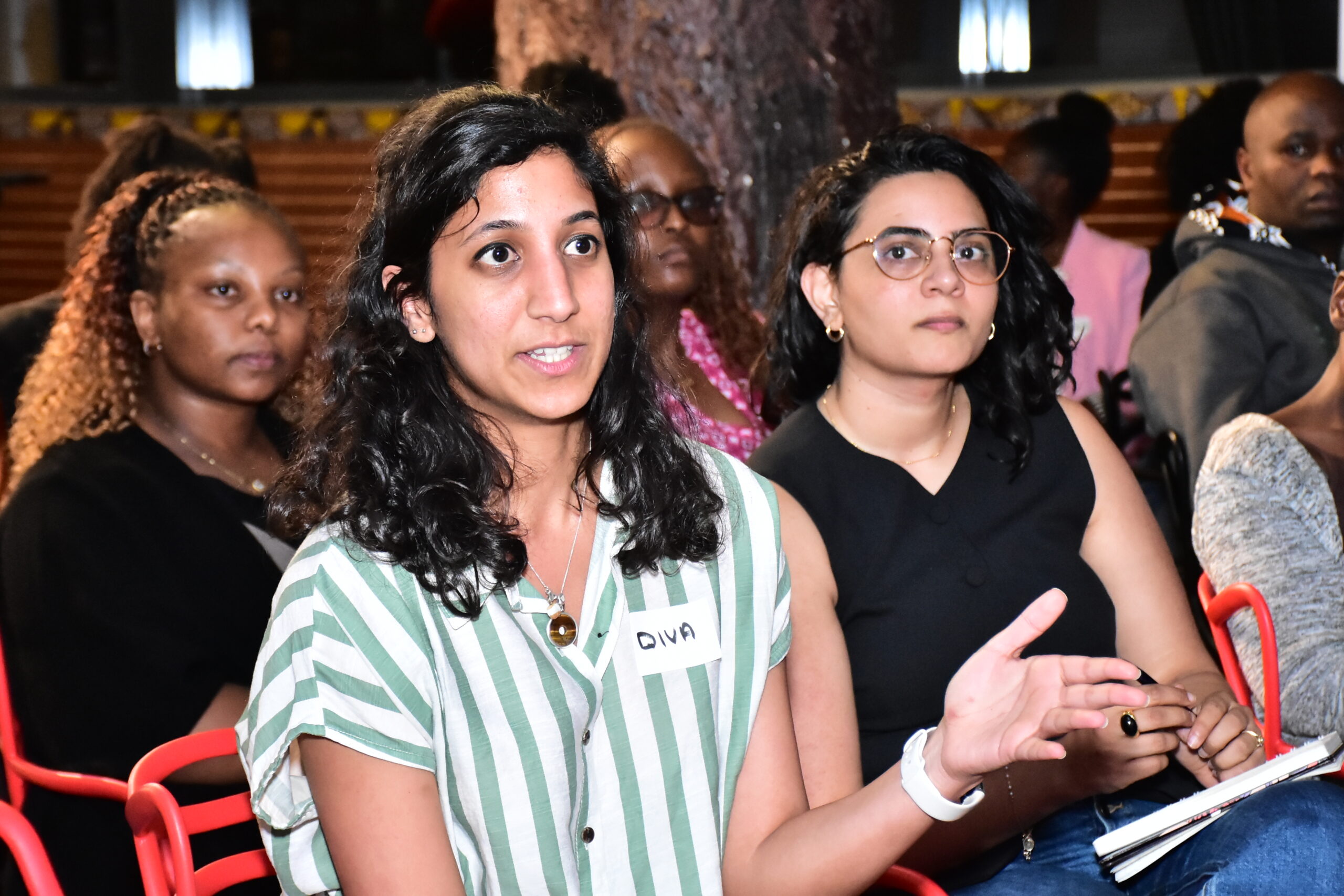
The evening closed with a confronting but necessary message: decent work is not a slogan – it is a commitment to humanity. As the conversation wrapped, one participant asked, “Are we truly building workplaces where people can live, not just survive?” The answers were layered, uncomfortable, and honest. Kenya has made progress, yes – but we are still wrestling with power, inequity, dignity gaps, and systems that normalise struggle. Yet, in the tension, there was hope. People are awakening. Businesses are learning. Communities are demanding better. And in that awakening lies an invitation – to rebuild workplaces around fairness, dignity, and shared prosperity.
This sixth edition of the RBC Susty Dialogue Series was more than a conversation. With the theme “Decent Work and Livelihoods Through Social Sustainability,” the evening pressed beyond frameworks and policies to explore how social sustainability actually shows up in workplaces, value chains, and everyday decisions. What does it look like to embed dignity so deeply into operations that it becomes part of a business’s character – not just its strategy? That was the heartbeat of the night.
From global networks to grassroot enterprises, every voice in the room echoed a powerful reality: social sustainability is not a CSR line item – it is the lived experience of people. It is reflected in wages, working conditions, gender equity, the cultures we build, the transparency we uphold, and the opportunities we create. Moderator Susan Njoroge set the stage by reminding the room that progress is never linear and that learning happens in community, not in isolation. “No one is coming to save us,” she said. “We build the future together.” Below are the key takeaways that shaped the evening’s dialogue:
1. Social Sustainability Begins With People – Not Policies
True social sustainability is rooted in how businesses impact human beings. It is seen in respect, protection, safety, and opportunity – especially for those most vulnerable in value chains. Policies matter, but lived experience matters more. A socially sustainable organisation is one where people can work with dignity and live with possibility.
2. Decent Work is the Foundation – Not the Outcome
Decent work is not the end goal; it is the minimum threshold for any credible sustainability effort. Fair pay, safe conditions, clear communication, freedom from exploitation, and opportunities for growth are the building blocks. When decent work is absent, sustainability collapses – no matter how strong the environmental or governance pillars appear.
3. Businesses Cannot Separate Themselves From Society
Every organisation exists within society, not apart from it. This means businesses must take responsibility for the ripple effects of their decisions – on employees, suppliers, communities, and marketplaces. Social responsibility is not charity; it is accountability for impact.
4. Fair Trade Demonstrates How People-Centred Models Work
Fair Trade challenges extractive systems by centering people and the planet. Its principles – fair wages, safe conditions, long-term relationships, sustainability standards, and transparency – show that ethical trade is not only possible but profitable. The grassroots examples shared underscored how dignity and fairness strengthen entire communities.
5. Dignity Must Be Practiced – Not Promised
Dignity is not a concept. It is daily behaviour. It means people are not belittled, sidelined, or silenced. It means workers understand their entitlements, have voice, are protected, and see the value of their contribution. When dignity is missing, social sustainability cannot exist – no matter how polished the reporting looks.
6. Human Rights Should Not Terrify Businesses – But They Often Do
Many companies panic at the mention of human rights because they misunderstand what it entails. Yet human rights simply ask businesses to do what is ethical, fair, and responsible. The gap lies in translating commitments into action. With global standards tightening, accountability is no longer optional.
7. Capitalism Without Restraint Distorts Values
Panellists reflected on how extreme competitiveness has slowly normalised treating people as expendable. The cost of this culture is deeply human – burnout, exploitation, and loss of dignity. But the emerging generation is refusing this model, demanding governance that honours people, not just profit.
8. Gender Equality Requires Intentional Systems – Not Goodwill
Achieving gender equity means tracking data, auditing promotions, examining recruitment practices, and addressing biases in pay and opportunities. Without deliberate systems, women continue to shrink as seniority increases. Equity must be engineered – not assumed.
9. Livelihoods Require Long-Term Thinking – Not Short-Term Gain
Supporting livelihoods means ensuring that individuals, families, and communities can build sustainable futures. The panellists emphasised investments in climate-smart agriculture, village electrification, accessible health infrastructure, and fair access to markets. When livelihoods thrive, societies thrive.
10. Listening is a Strategic Asset
Social sustainability requires listening – truly listening – to workers, communities, and vulnerable groups. Without listening, interventions miss the mark and undermine the very people they aim to support. Dignified workplaces are built on dialogue, transparency, and participatory decision-making.
11. Micro-Behaviours Shape Macro Outcomes
Social sustainability isn’t built on grand strategies, but in the everyday actions that shape how people feel and work together — how supervisors speak to their teams, how conflict is resolved, how mistakes are treated, how feedback is given and received, and how opportunities are shared. These small actions, repeated over time, accumulate into culture — for better or for worse.
12. Community Engagement Requires Depth, Not Optics
Social sustainability demands that businesses meaningfully engage communities – not tokenise them. Real engagement is co-created, contextual, and grounded in long-term partnership, especially with vulnerable groups whose voices are often excluded.
13. Youth Influence the Future of Social Sustainability
Younger generations bring values of fairness, transparency, and accountability. They expect more from employers and will increasingly shape workplace norms. Their voices are essential – not optional – for building future-fit social sustainability practices.
14. Social Sustainability Requires Courage and Clarity
Moving from intention to implementation requires businesses to demonstrate real courage, the courage to confront uncomfortable truths, to challenge harmful norms, to invest meaningfully in their people, and to prioritise long-term impact over short-term optics. Sustainability is not a performance; it is a posture.

As the dialogue drew to a close, the evening ended on a thoughtful and symbolic note. The panellists were gifted a charming little teapot – a gentle reminder that meaningful change begins in small, human moments. Susan shared her hope that, over the festive season and beyond, each teapot would spark slow, grounding conversations: the kind that build connection, reflection, and the courage to reshape workplaces toward decent work and dignified livelihoods.
The attendees, on the other hand, received beautifully crafted reusable pencils – a fun and practical Christmas token that also demonstrated the spirit of sustainability in action. A simple gift, yet a powerful illustration that even everyday items can carry impact, intention, and responsibility.
This edition left us with a clear message: decent work and dignified livelihoods are not delivered by policies – they are created by people, behaviours, power dynamics, and choices. And whether we sit in boardrooms, factories, community groups, or social enterprises, the responsibility is shared.
The invitation is simple: let’s work together to build workplaces where dignity is non-negotiable and societies where livelihoods are truly secure. It’s time for all of us to walk the talk – together.