
Sustainability TLDR Newsletter: Edition 42
This newsletter gives you highlights of selected sustainability insights that were, perhaps, too long (you) didn’t read (TLDR) or there’s just too much out there to read. The highlights presented cover insights gleaned from a global, African, and Kenyan perspective. Happy reading!
GLOBAL
The State of Climate Action 2025 Report
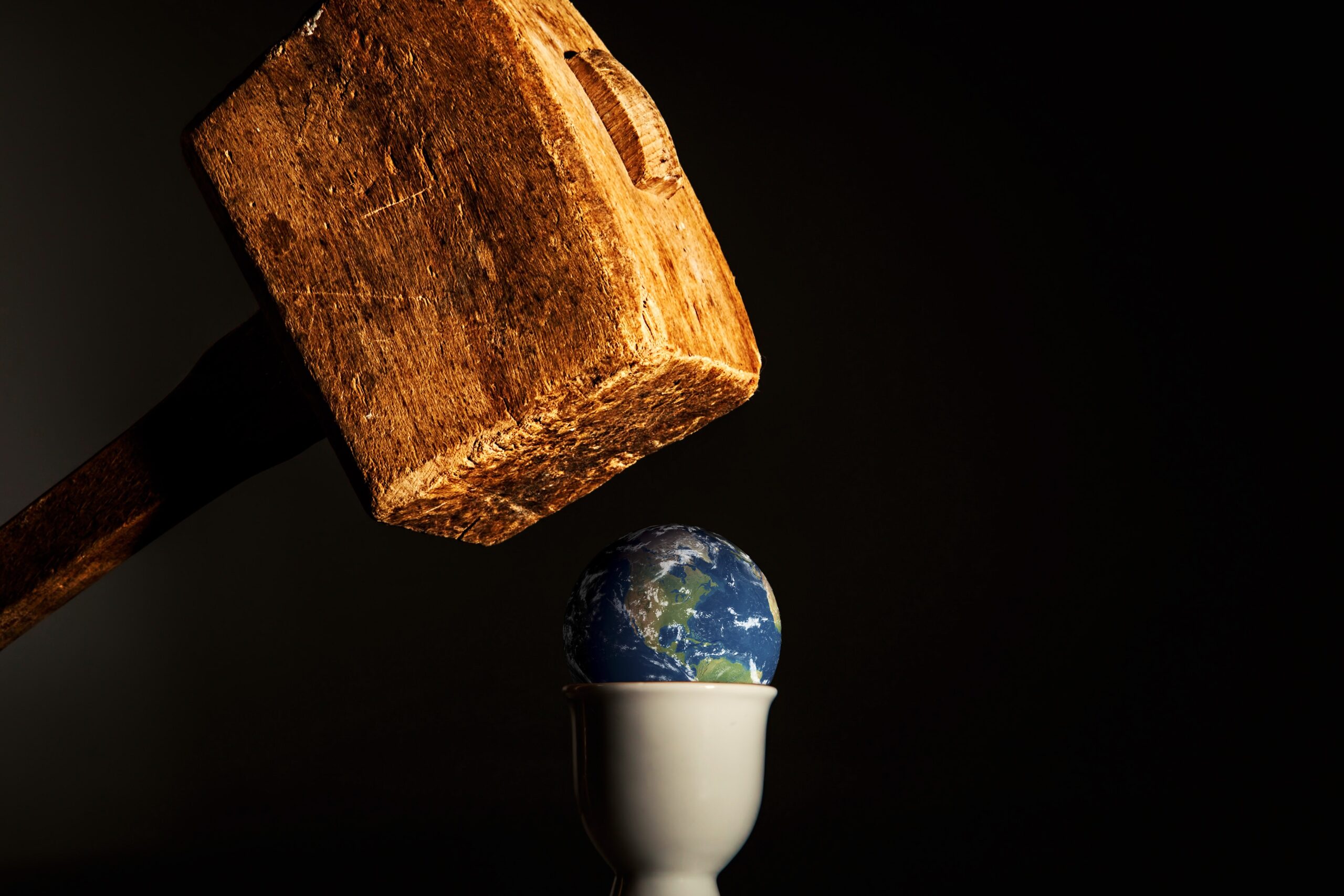
Ten years after the Paris Agreement, global climate action is moving, but definitely NOT fast enough. This report assesses 45 indicators across the highest-emitting sectors, which account for 86% of global greenhouse gas emissions: power, buildings, industry, transport, forests and land, food and agriculture, and finds that none are on track to meet 1.5°C-aligned 2030 targets. While most indicators are may be moving in the right direction, progress remains too slow, and global GHG emissions continue to increase rather than decrease. Experts say we have already passed the 1.5 C threshold.
It is important to note that the transition has already begun. For example, clean energy investment exceeded US$2 trillion in 2024, renewable energy generation recorded its largest-ever annual increase, and solar is now described as the fastest-growing power source ever. Additionally, private climate finance has also grown sharply, and emerging technologies such as green hydrogen are beginning to gain traction.
This transition is very fragmented, and gains are being offset by persistent fossil fuel dependence, weak progress on coal phase-out, rising public fossil fuel finance, slow industrial decarbonisation, and continued deforestation. These offsetting issues need to be reversed, namely:
-
Coal-fired electricity must decline far faster.
-
Reduce deforestation nine times faster; and
-
Total climate finance needs to grow four times faster by 2030.
The report also highlights that private sector climate action:
-
Must be sector-wide transformation as a priority, not an option, as the highest-emitting sectors of power, buildings, industry, transport, forests and land, food and agriculture, are responsible for 86% of global greenhouse gas emissions.
-
Is now a competitiveness, resilience and risk-management agenda.
-
Has to move from climate commitments to implementation: cutting operational and value-chain emissions, shifting to renewable electricity, improving efficiency, investing in low-carbon transport and logistics.
-
Urgently requires eliminating deforestation from supply chains.
-
Is a social sustainability concern given increasing climate impacts and risks to people and society, and businesses are increasingly expected to reorient performance metrics toward well-being, equity and sustainability, not just growth or financial return.
-
Involves aligning finance and investment by directing capital expenditure, lending, insurance and procurement toward climate-resilient, low-carbon activities.
The world is at the point where, collectively, we need to scale transition solutions with urgency – solutions like: renewable energy, reversing deforestation, less meat production and consumption, increasing climate finance, strengthen public transport systems and carbon removal technologies.
It’s also vital that these solutions align to just and inclusive transition goals, and finally, business has to see climate action as economic (and social) resilience, competitiveness, and long-term value creation.
In 2023, the IPCC report gave multiple areas of opportunities, and here are a few that were highlighted as critical levers for climate action:
-
Scale solar, wind and energy efficiency as immediate, cost-effective mitigation options.
-
Reduce methane emissions in energy, waste and agriculture value chains.
-
Invest in sustainable land use, ecosystem restoration and improved forest management.
-
Reduce food loss and waste across production, distribution, retail and consumption.
-
Build climate-resilient infrastructure, including reliable power systems, efficient water use, smart grids and stronger adaptation planning.
My two cents: Let’s focus on what we can do; that’s what will pull us forward. And if you are still wondering what you could do as an individual, well, here are 2 lifestyle choice changes for you to consider: (1) switch to your vehicles to non-fossil fuel because passenger cars and vans are +60% of road transport emissions – not a bad idea with the fuel prices. (2) Eat less red meat every week, especially if you are in a high-consumption geography, e.g. Australia, New Zealand, South America, North America; but frankly, wherever you are eat less meat.
AFRICA
Food Or Poison? The cost of Highly Hazardous Pesticides to Africa’s food security
This Greenpeace Africa report gives a strong warning that Africa’s food security challenge is not only about producing more food, but about protecting the ecological systems that make food production possible.
The report shows that Highly Hazardous Pesticides are widely used in Kenya, Ghana and South Africa, despite many being banned in Europe and the USA. Examples include: the insecticides chlorpyrifos and imidacloprid, the fungicide tebuconazole and the herbicides glyphosate and atrazine.
In Kenya and Ghana, almost half of the registered pesticide active ingredients are classified as Highly Hazardous Pesticides, while in South Africa, the figure is over a third. These chemicals contaminate soil, water, food, pollen and nectar, and threaten pollinators, soil organisms, aquatic life and human health. About 75% of all crop species get higher yields with pollinators, and 35% of the world’s crop production depends on animal pollination.
FAO’s Africa Regional Overview of Food Security and Nutrition 2023 deepens this picture by showing that Africa’s food crisis is already severe, as nearly 282 million people in Africa were undernourished in 2022, that’s about 20 per cent of the continent’s population, with this situation being worsened by climate shocks, economic pressures, high food prices and reduced affordability of healthy diets.
Soil pollution is a global issue, and with 36 of the 80 most affected countries being in Africa, it is a disproportionately critical issue for the continent. This means pesticide dependence must be understood within a wider food systems crisis. Yes, the continent needs more resilient, affordable and nutritious food, but this cannot be achieved by degrading soils, pollinators and water systems.
Africa’s food security has to shift from a focus on short-term yields to a broader agenda of safe, nutritious, climate-resilient and nature-positive food systems. Here are some vital actions and considerations Greenpeace Africa recommends to protect the foundations of Africa’s agriculture:
-
Phase out procurement and use of HHPs, prioritising safer pest management and biological alternatives.
-
Invest in agro-ecology, soil health, regenerative farming and integrated pest management across supply chains.
-
Get training on safe input use, organic inputs, pollinator protection and climate-resilient production.
-
Strengthen traceability, residue testing and supplier standards for food safety and environmental protection.
Agriculture, fisheries, forestry, pharmaceuticals, tourism, and extractives have obvious dependencies on biodiversity. As do retail shops, supermarkets and restaurants. Any agri-business (large or micro, small and medium enterprises-MSMEs), as well as any entrepreneurial African with a small farm in their home and of course, any person on this continent eating food – take heed.
My two-cents: About 30% of the world soils are moderately to highly degraded – 40% of those degraded soils are in Africa, and yet Africa has a quarter of the world’s arable land! As climate change and impacts take effect, we need different agricultural practices, as the current ones are destroying soil health. It’s a tough road ahead providing healthy food for societies, and at the same time, regenerating the land the feeds us. BUT it is possible, and India’s natural farming practices are showing successes that farmers and countries can learn from.
KENYA

Gender and Corruption in Kenya
The Kenya National Gender and Corruption Survey 2025 presents corruption not only as a governance problem but as a lived inequality issue. Published by the Ethics and Anti-Corruption Commission in partnership with United Nations Office on Drugs and Crime, National Gender and Equality Commission, Kenya National Bureau of Statistics, and Transparency International Kenya, the report shows that access to public services is being mediated through bribery and coercion.
The survey results highlight that corruption continues to undermine access to essential services, especially healthcare, employment, identification documents, justice, transport services and public administration. The results also point out that 98.6% of Kenyans who paid bribes in 2025 did not report the incidents, implying low trust in complaint systems and that reporting does not lead to action.
Some key insights I’d like to highlight from the report:
-
Over 80% of bribes are paid before services are rendered, and so ‘gatekeeping’ corruption prevents access to services.
-
Bribery is rising: the national average bribe increased from KSh 4,878 in 2024 to KSh 6,724 in 2025.
-
Young people between 18-24 years show the highest willingness to engage in corruption.
-
Over 70% of respondents believe the government does little to fight corruption, and just 14% believed the government was committed to fighting corruption.
-
Women gave bribes mainly to tax and revenue officers, immigration officers and health workers; men more frequently bribed National Transport and Safety Authority officers, police officers and public school teachers or lecturers.
-
Police, civil registration and National Transport and Safety Authority officers were among the leading recipients of bribes.
-
Women are more exposed to both monetary bribery and demands for sexual favours, especially when seeking essential services such as healthcare, employment and administrative services.
-
Young people, especially those aged 18–34, were identified as most affected by sexual exploitation when seeking employment or medical attention.
The report presented some policy recommendations, such as:
-
Digitize and simplify public services to reduce unnecessary face-to-face interactions, discretion, brokers, delays and bribing opportunities.
-
Target high-risk institutions for integrity reforms, especially police, civil registration, transport, immigration, tax, health and employment-related services.
-
Educate citizens, especially youth and women, on their public service rights and reporting channels. Bribery should not be normalized as the only way to access public services.
The about.1M Kenyan civil servants (government workers) not only take over 50% of government revenue (mainly taxes paid by Kenyans) as salary but are also blocking and/or denying over 54M Kenyans their public services. It’s hard to imagine that the main recipients and gatekeepers of corruption (public services) would be the same ones to self-correct as per the policy recommendations made by the EACC report.
It will take other stakeholders and institutions like civil society, the media and the private sector to press for change. It is important not to forget that the private sector and citizens themselves are also complicit in corruption. At the same time, we are all aware the corruption is crippling businesses, our economy (7.8% of GDP is lost in corruption), society and possibilities for development. As the owners and leaders of the real economy, here are some considerations for businesses:
-
Manage corruption as an ESG, human rights and workplace-risk issue, not only a legal compliance matter.
-
Business associations should advocate for transparent service charters, digitised public services and faster complaint resolution.
-
Professional bodies should put in place reporting mechanisms to clean up their own professions. Businesses and/or their associations can consider working with professional bodies e.g. health professional bodies, human resources professional bodies, to mitigate and penalize offenders.
-
Employers must strengthen anti-harassment, whistleblowing and procurement policies to address both bribery and gendered abuse of power.
-
If a company needs guidance on a code of business ethics, check out the Kenya’s Code of Business Ethics initiative from KEPSA, KAM and Global Compact Network Kenya
My two-cents: The statistics on young Kenyans’ reality of corruption is disheartening – is this the ‘role modelling’ we have demonstrated? And so, as the Somali proverb says, ‘Your previous lies will contradict your future truths.’