
Sustainability TLDR Newsletter: Edition 41
This newsletter gives you highlights of selected sustainability insights that were, perhaps, too long (you) didn’t read (TLDR) or there’s just too much out there to read. The highlights presented cover insights gleaned from a global, African, and Kenyan perspective. Happy reading!
GLOBAL

The Impact and Dependency of Business on Biodiversity
Published in February 2026, the IPBES Business and Biodiversity Assessment evidences the impact and reliance of business on nature emphasizing that every economy, every sector, and every value chain, every society cannot survive without nature.
All businesses depend on biodiversity and affect it, whether through raw material extraction, land and water use, pollution, logistics, waste, finance, or consumer markets. Yet biodiversity impacts are not or poorly reflected in business decision-making, even though it now poses a systemic risk to economic stability, financial systems, human wellbeing, and rights.
A key insight is that business dependencies on nature are often hidden, making them less obvious for decision-making; yet integral to business continuity. Consider the following:
-
Agriculture, fisheries, forestry, pharmaceuticals, tourism, and extractives have obvious dependencies, but so do less visible sectors.
-
Retail shops, supermarkets and restaurants depend on biodiversity through agricultural supply chains.
-
Waste management depends on microbial communities for waste processing.
-
Businesses also rely on regulating functions such as pollination, water supply, flood mitigation, climate regulation, soil protection, filtering of air to make it breathable.
-
Humanity also relies on non-material contributions such as recreation, education, and cultural value.
The report calls out that businesses dependencies are also less well understood than impacts, particularly in the regions of Africa and Oceania – which means that hundreds and thousands of companies in these regions may be underestimating their exposure; as are the hundreds and thousands companies reliant on any value chains in these regions.
On impacts, the report is clear that all sectors contribute, directly or indirectly, to biodiversity loss, often through value chains. Impacts can be cumulative, cross ecological tipping points, and can become irreversible.
Sectors with relatively high quantified direct impacts include agriculture, forestry and fishing, electricity and energy, mining and quarrying, construction, and transport and storage. The report adds that while businesses can often claim having positive outcomes the strategies used often only address reductions in harm, not credible nature restoration and/or regeneration.
The report also highlights why progress is slow. In 2023, finance flows with direct negative impacts on nature were estimated at $7.3 trillion, compared with about $220 billion directed to biodiversity conservation and sustainable use.
Businesses also face weak incentives, voluntary disclosure norms, limited value-chain transparency, weak access to reliable data and models, and decision cycles that are far shorter than ecological recovery cycles. As such, regulators are falling short of their public service obligations.
The negative impacts on biodiversity (all forms of life) are happening at ‘lightning pace’. While it may seem complex (interdependencies are), the global Convention on Biodiversity (CBD) provides 23 targets for urgent action towards 2030 (4 years ahead); and here are some practical actions businesses need to have in place to contribute towards these targets:
-
Assess and disclose nature-related dependencies, impacts, and risks across operations, value chains, and portfolios, aligning with CBD Target 15.
-
Apply the mitigation hierarchy in practice: avoid damage first, then minimise, restore, and only lastly offset residual impacts.
-
Re-design production and sourcing models toward biodiversity-friendly practices, circularity, waste reduction, and lower pollution, consistent with CBD Targets 7, 10, and 16.
-
Integrate biodiversity action into governance and investment decisions so nature is built into strategy, procurement, capital allocation, and performance management, in line with CBD Target 14.
-
Work with communities, and other stakeholders to respect knowledge, improve stewardship, and support fairer, more nature-resilient outcomes for society and businesses.
My two cents: It’s impossible to separate nature and human life – humans are a form of biodiversity; so it seems so obvious that we must protect and conserve the nature that gives us life…but we don’t. So maybe it’s better to say nature will protect us from climate change…will that get business and decision-makers to take action?
AFRICA
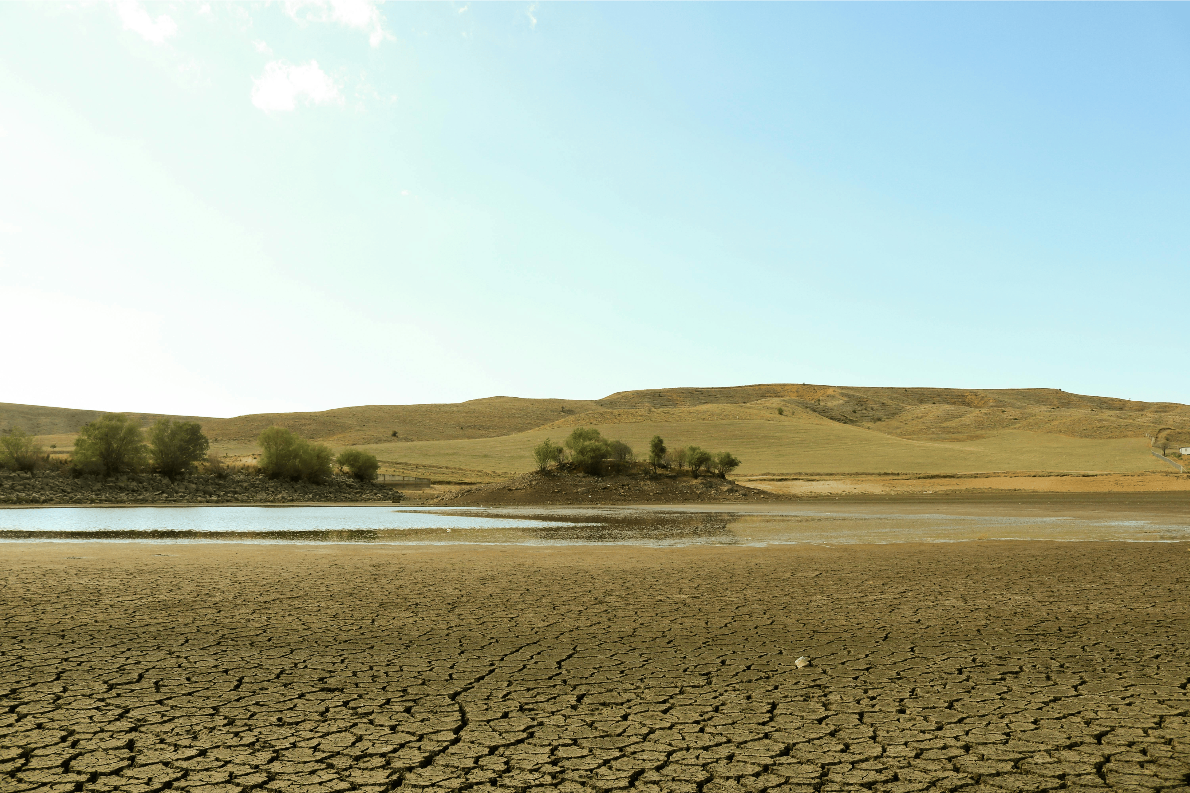
Africa Union’s 2026 Year of Water Sustainability
This year (2026), the African Union (AU) is using its Theme of the Year to put water and sanitation at the centre of Africa’s development agenda: “Assuring Sustainable Water Availability and Safe Sanitation Systems to Achieve the Goals of Agenda 2063.” The annual thematic is a continent-wide call to action, stressing that safe water and sanitation are but pathways to health, economic growth, and resilience, and urging governments, civil society, and the private sector to collaborate.
At the start of this year, the UN announced that the world has now entered into the era of global water bankruptcy, where the world is now at irreversible losses of natural water capital and living beyond our hydrological means. The AU’s 2026 Year of Water Sustainability is a vital call for Africans to protect and conserve their natural water resources, and better manage water resources, urgently!
This year’s theme amplifies the continent’s Africa Water Vision 2063 and Policy, published in 2026 as a long-term blueprint for ‘a water secure and resilient Africa with safe sanitation for all.’ The Vision positions water as Africa’s most vital strategic resource and argues that sustainable water availability underpins labour productivity, food and energy security, industrialisation, climate resilience, ecological balance, and social equity.
The Water Vision 2063 has 8 statements that set out the direction of travel:
-
Universal access to safely managed water, sanitation and hygiene – focuses on reliable safe water for households, inclusive sanitation systems, hygiene access, and reducing health and environmental risks from pollution and waste.
-
Sustainable water availability for growing economies and populations – water efficiency, stronger supply systems, wastewater reuse, non-conventional water sources, climate-resilient infrastructure, and valuing water in economic planning.
-
A thriving blue economy – Africa’s aquatic resources should support prosperity, jobs, biodiversity protection, climate resilience, and well-being through sustainable fisheries, coastal economies, and regenerative approaches
-
Strong governance and leadership – accountable institutions, transparent data, inclusive participation, stronger regulation, and financing systems grounded in subsidiarity, accountability, and international water law.
-
Shared water basins as assets for peace and regional integration – shared rivers and aquifers should be managed cooperatively to support trade, peace, regional integration, benefit-sharing, water quality, and disaster risk management. 90% of Africa’s surface water crosses borders and 40% of Africans depend on shared aquifers, making cooperation a practical necessity.
-
Resilience against water-related disasters – centers ecosystem protection, climate adaptation, early warning systems, and better protection of people, economies, and ecosystems from floods, droughts, and other shocks.
-
Stronger human capital and technological capability – African countries need stronger skills, African-led innovation, digital transformation, research capacity, and green jobs to manage water well over the long term.
-
Integrated water information systems that support science -based planning and better economic decision-making – robust water data, water valuation, sanitation economy metrics, and better use of evidence in budgeting, investment, and national planning.
The African Ministers’ Council on Water (AMCOW) founded in 2002, has the mandate to assure the continent’s water security. They founded The African Water Facility (AWF) to help convert Africa’s water vision into investable action. Hosted by the African Development Bank, the AWF’s 2026–2030 strategy is to be a market-responsive catalyst for the water sector. Its priorities are catalytic investments, investment promotion, and water governance.
In practice, it provides seed funding, supports projects that can crowd in private finance, and strengthens the policy and regulatory environment for water infrastructure and services.
For businesses on the continent, the UN’s alarm on the global water crisis; and the Africa Union’s focus on water; needs to be heeded as a call to action for 2026 and beyond:
-
Set water stewardship targets now Integrate water risk into board strategy and capital planning. Measure water use, wastewater, reuse, pollution, and sanitation performance across operations.
-
Prioritise protecting and conserving water resources e.g. water towers, wetlands, rivers, lakes etc. that your business and stakeholders rely on.
-
Invest in circular water and sanitation solutions. Businesses should back reuse, recycling, resource recovery, wastewater treatment, and sanitation economy models, which the Vision treats as core future pathways.
-
Partner to strengthen safe water and sanitation systems at scale.
-
Support and invest in WASH initiatives in surrounding communities, improve workplace sanitation, support women- and youth-led water innovation.
My two-cents: We are already in the era of the global water crisis. In a crisis, the response is as critical as the crisis itself. I outline this because this water crisis is a social crisis too. Whatever level you wish to consider taking action to reduce and adapt to the water crisis, be sure to take action. Here are 5 possible areas to do that.
KENYA

Kenya’s National Carbon Registry
Kenya launched its National Carbon Registry to enable the shift from fragmented carbon trading to a more formal, transparent national system. The registry is managed by the National Environment Management Authority, as the country’s sovereign digital platform for registering, tracking, authorising and reporting carbon market activities, including carbon credits and Internationally Transferred Mitigation Outcomes (ITMOs) under Article 6 of the Paris Agreement. The Registry’s purpose is to create a trusted national record of who is generating emissions reductions, who owns them, and when they are sold, transferred or retired.
All carbon projects will be developed, validated, approved by the NEMA – as the Designated National Authority, independently verified, entered into the registry, and then issued, transferred or retired as uniquely identifiable units. This should create opportunities for stronger credibility, better access to climate finance, clearer project governance, and greater local benefits, including the reported requirement that 25 percent of project proceeds support community projects.
Carbon markets have long faced credibility problems, especially around double counting, weak oversight and limited community benefit. Kenya’s registry seeks to address these risks by improving transparency, standardising approvals, and making carbon transactions more visible and verifiable. The National Carbon Registry also aims to complement Kenya’s Reducing Emissions from Deforestation and Forest Degradation Plus registry launched in 2025, as a nationally coordinated system managing forest carbon projects.
Kenya’s registry launches as Africa is also raising the bar for carbon market integrity. The African Union Development Agency–New Partnership for Africa’s Development launched the African Principles for Equity and Integrity in Carbon Markets, with principles that emphasise integrity, equity, transparency, inclusivity, fair benefit-sharing, and social safeguards.
For Kenyan businesses looking to leverage carbon markets to manage their climate action:
-
There is market opportunity, but only for credible projects in renewable energy, clean cooking, forestry, agriculture, transport and nature-based solutions is they can prove real and measurable emissions reductions.
-
The registry calls for higher standards of documentation and compliance in project data, clearer evidence, and better internal systems for monitoring, reporting and verification.
-
A transparent registry means businesses should treat carbon credits as part of serious climate strategy, not just a branding exercise.
-
This is much stronger expectation on community benefit and fairness with closer attention to how local communities are consulted, compensated and included.
My two-cents: The world has missed the Paris Agreement aspiration of limit global heating to 1.5 degrees. For countries like Kenya climate impacts are going to get very serious. Let’s hope that our carbon market efforts prioritise climate adaptation and resilience; more so than mitigation, because that’s what we need more of.