
- INTRODUCTION
“Doing the right thing is easy to say – until something is at stake.” That unspoken tension sat at the heart of the seventh edition of the RBC Susty Dialogue Series, held on Thursday, 7th May 2026 at Baraza Media Lab, Nairobi. Hosted by Responsible Business Consulting (RBC), the evening brought together professionals, business leaders, governance practitioners, sustainability actors, organisational culture champions, and members of the wider responsible business ecosystem. Their shared mission: to explore what ethics and integrity truly demand of individuals, leaders, boards, organisations, and society when the pressure to compromise is real. It was not merely a dialogue about compliance – it was a candid invitation to examine character, confront contradictions, and rethink what it means to do the right thing in business.
Opening the session, moderator Susan Njoroge, Managing Director at RBC and CISL Fellow, anchored the room in a deeply personal and practical reflection. She recalled a moment in 2016 when, while rushing to pick up her mum from hospital during a difficult season of chemotherapy, she squeezed through an orange light and found herself stopped by the police. Sitting there, she wondered what choice she would make. Years later, she heard Dr. Ogutu from Strathmore University speak about never paying bribes. He explained to officers that he was a teacher and wanted people’s children to be taught right. He said that if it came to it, he would rather go to court than pay a bribe. When he eventually went to court after being arrested, he saw familiar faces there and was happy to realize that the majority of them were Strathmore University students.
Those stories set the tone for the evening’s central question: when push comes to shove, what do we actually do? Susan challenged the room to think beyond slogans and policies, especially in a context where corruption, quiet handshakes, silence, and rationalisation can so easily become normalised. She also drew attention to the fact that in the 2023/2024 KPMG global survey of companies reporting on sustainability, only 25% reported on SDG 16 – a striking gap given how deeply peace, justice, strong institutions, ethics, and accountability shape sustainable business and national growth.
The panel conversation then deepened the evening’s purpose with a rich, reality-anchored exploration of ethics and integrity in practice. The speakers – Dr. Stefan Groschl, Research Professor in the Department of Management at ESSEC Business School, Paris-Singapore and Visiting Professor at Strathmore Business School; Nkirote Njiru, Group Human Capital Executive at Old Mutual Kenya; and Caroline Okong’o, Board Director, Advisor and Executive Coach – unpacked ethics not as an abstract moral idea, but as a lived discipline. They explored the difference between knowing what is right and actually doing it; the relationship between values, behaviour, accountability, and trust; and the uncomfortable truth that organisational culture often operates exactly as it has been designed to operate. From boardrooms to people systems, from whistleblowing to promotions, from governance to moral disengagement, the conversation revealed that integrity shows up in the decisions organisations reward, tolerate, confront, or quietly allow to continue.
What followed moved the evening from reflection to participation. Audience members raised critical questions on fraud, pressure, rationalisation, opportunity, power, governance, shareholder supremacy, culture, values, and the challenge of defining expected behaviours clearly enough for every person in an organisation to understand. The discussion also stretched into bioethics, public systems, government structures, bribery, employee empowerment, storytelling, symbols of culture, and the reality that individuals cannot be left alone to carry the weight of broken systems. Through these contributions, one message became increasingly clear: ethics is not private. It is reputation capital, social capital, leadership capital, and institutional capital – and sooner or later, it is tested.
Participants then moved into structured breakout conversations designed to translate the panel’s insights into practical organisational action. The groups reflected on three core questions:
- How can companies maintain integrity in their sustainability commitments while dealing with the reality of rising complexity, competing demands?
- What is needed to create an organisational culture that is ethical and based on integrity?
- What would it take, practically, to build a workplace where people feel safe and genuinely empowered to speak up against unethical behaviour? What is one thing your organisation could do tomorrow?
From defining sustainability commitments and embedding them into purpose, to setting clear KPIs, tracking implementation, creating consequences, strengthening reporting channels, protecting anonymity, clarifying procedures, and involving staff in ethical processes, the breakout discussions pushed the room from theory into practice.
The evening closed with reflections from the panelists – and a renewed call to self-examination. The panelists reminded the room that ethics and integrity are ultimately about people, good governance, and rewarding the right behaviour. They reflected that organisations are human systems, and that the real work of leadership is not only designing products and processes, but designing for dignity, voice, fairness, and care. The panelists brought the conversation back to the individual, inviting participants to reflect on what they are living for and whether they are spending their lives doing work that aligns with their values. Susan closed by reminding the room that ethics is a continually testing and evolving topic, especially in a society where young people are increasingly being confronted by corruption as a possible norm. By the end of the night, one truth was unmistakable: doing the right thing is not a statement. It is a choice, a culture, a system, a discipline, and a daily practice – especially when no one is watching.
- PANEL CONVERSATION
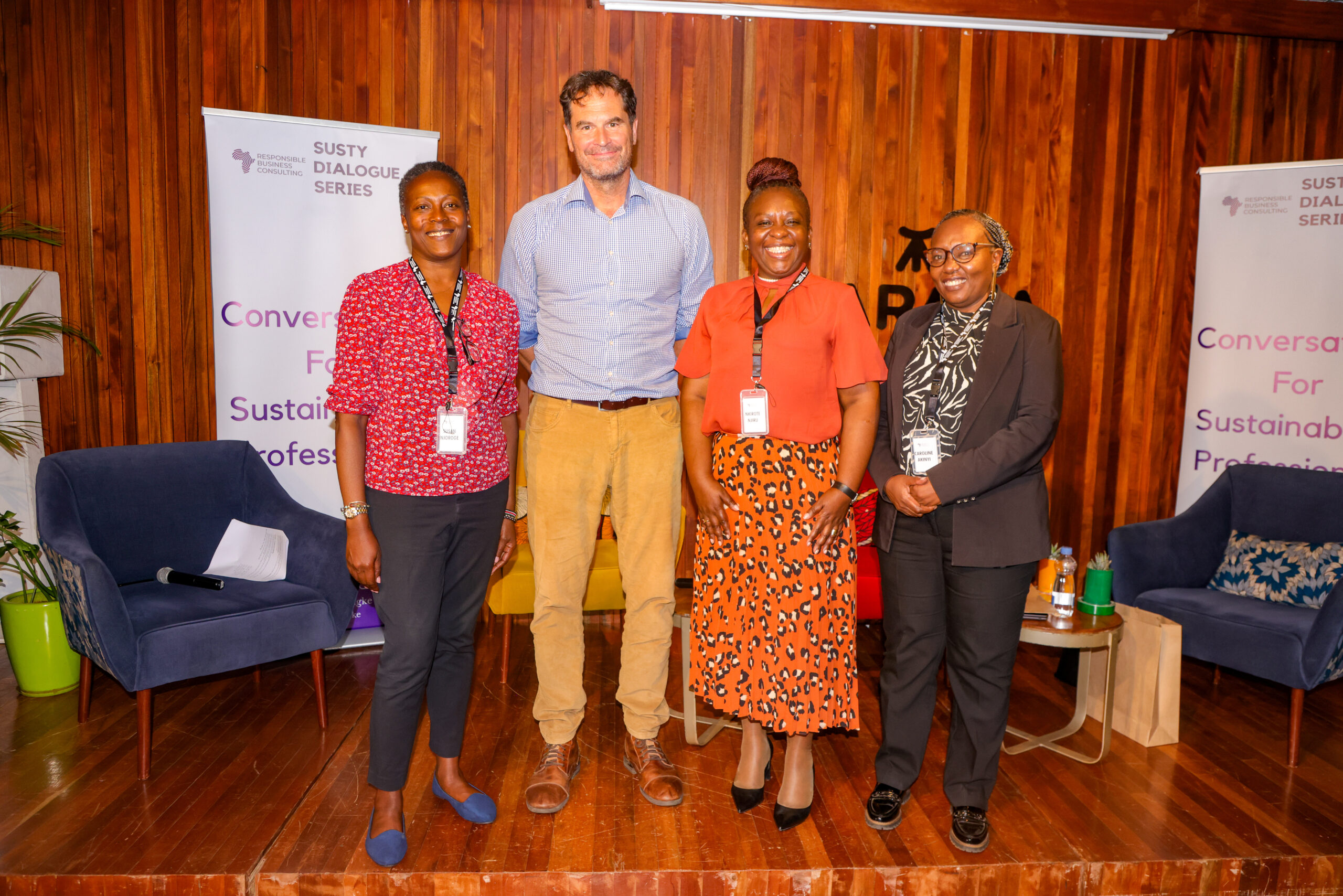
- Moderator: Susan Njoroge, MD Responsible Business Consulting, CISL Fellow
- Dr. Stefan Groschl, Research Professor in the Department of Management at the ESSEC Business School, Paris-Singapore; Visiting Professor Strathmore Business School, Kenya
- Nkirote Njiru, Group Human Capital Executive, Old Mutual Kenya
- Caroline Okong’o, Board Director, Advisor & Executive Coach
Question:
What is ethics, integrity, and how does it play out?
Answer:
One of the panelists explained that ethics is fundamentally about understanding what is right or wrong, or what is good or bad. He said it is concerned with the kind of decisions people make and the basis upon which those decisions are made. In his view, ethics is about how people ought to act, but he was also careful to note that it is not for him to tell someone else what to do. Rather, ethics invites individuals to examine their own choices and their own moral responsibility.
He went on to describe integrity as more of a personal quality, particularly when it comes to honesty and authenticity. He said being authentic means aligning one’s behaviour with one’s values. In other words, integrity is reflected in whether a person lives in a way that is consistent with what they claim to believe. He added that integrity is also about coming across as trustworthy, because when people do not walk in their values, others notice.
He therefore linked ethics and integrity quite closely: ethics concerns the questions of right and wrong, while integrity concerns whether a person consistently lives out those values in an honest and authentic way. Together, they shape how individuals act and how they are perceived by others.
Question:
How do ethics play out from an individual in an organization?
Answer:
Another panelist noted that ethics is often spoken about from a compliance perspective, with organizations focusing on whether people are compliant or non-compliant. She said that this tends to make ethics seem abstract, when in reality it is not abstract at all. According to her, ethics plays out at organizational level through the decisions made every single day by individuals and by leaders.
She pointed to very practical examples of where ethics becomes visible in an organization: who gets hired, who gets promoted, how a complaint is handled, whether that complaint is internal or external, and whether a manager chooses to hold someone accountable or instead cover for them. She said these are the real places where ethics shows up. In her view, the uncomfortable truth she has been sitting with is that culture is not broken in most organizations; rather, it is operating exactly as it was designed to operate.
She explained that culture is shaped by what organizations reward, what they tolerate, and what they quietly allow to continue without confronting. She emphasized the danger of that quiet tolerance and the failure to confront issues directly. She then brought the matter back to the individual level and described integrity as the alignment between what a person believes and what they do, especially when they have something to lose, such as time, comfort, convenience, or security, and a decision still has to be made.
She also highlighted that within organizations, ethics plays out in the choices individuals make: what they do, whether they speak out, and what they are willing to speak out about. She referred to global statistics showing that 93 percent of employees say they will speak up when they see something wrong, but only 50 percent actually do so. She described this as the “silence gap.”
She added that leaders set the tone for the conduct of the organization, and she suggested that ethical decline often begins when people stop believing what the organization says. In that sense, the loss of belief is where the problem starts, not only in organizational systems, but also in the erosion of trust between people and the institution. She framed the issue across three levels: the individual level, the leadership level, and the systems level.
Question:
As founder, how do you see integrity and ethics play out at that top level, when the pressure is there?
Answer:
A panelist responded that ethics and integrity at the top level come with a great deal of responsibility. Drawing from her experience, including chairing policy spaces where many things can go wrong, she acknowledged that the pressure at that level is real. Even so, she stressed that how one handles those moments first as an individual matters greatly. For her, the starting point is whether a person knows right from wrong and whether they are willing to confront the challenges that arise.
She said that ethics starts at the individual level, and from there it becomes a collective matter. Leaders must understand the challenges before them and face them directly, rather than avoiding them. She emphasized the importance of making sure that everything is done properly and of asking whether people genuinely believe that you have integrity.
She then expanded the conversation beyond the individual and pointed to the collective responsibility of leadership bodies such as boards. She noted that decisions at board level should be made as board decisions, not as the personal choices of one individual acting alone. In her view, ethics and integrity at that level go beyond policies and procedures; they must be demonstrated in conduct and in how leaders cascade responsibility throughout the organization.
She also reminded the audience that from a board perspective, there is real accountability and potential liability. Leaders therefore have a duty to assess situations and determine whether something is ethical or not. She posed the deeper moral challenge this way: would you do something that only you know is wrong, even if it is not explicitly against the law? That, for her, is where integrity is truly tested.
Question:
There is a tone to be set. Who is defining and shaping ethics? Who says what is right or wrong?
Answer:
A panelist observed that this question ultimately comes down first to the individual level and then to the society level. He suggested that organizations must ask themselves why they exist, and individuals must ask themselves what they live for. He gave the example of students who can readily explain their company’s mission and vision, yet struggle to express their own ambition statement or deeper purpose. He challenged that by asking: why do you live?
He argued that ambition plays a major role in shaping ethics. If profitability becomes the ultimate end, then it can begin to justify all means. By contrast, if a company values community, healthy working life, and the well-being of employees, then profitability becomes a means to achieving those other ends rather than the end in itself. In that sense, what an organization exists for directly shapes its ethical posture.
He also noted that values are shaped by family and then by society, but he maintained that at the end of the day, it still comes down to the individual. Even if one lives in a society with weak ethics, each person still has responsibilities, and those responsibilities must be examined carefully. He asked what one’s responsibilities are and to whom: shareholders, employees, communities, or others. These responsibilities shape values and beliefs, including how far down the value chain one believes one’s duty extends.
He also raised the question of whether organizations have a responsibility for employee well-being, making the point that these definitions are not simply handed down by one specific person. Organizations shape them, but individuals must also define them for themselves. In his view, ethics is shaped both collectively and personally, but the individual can never be removed from the equation.
Question:
How have you gone about defining ethics? You talked about challenges – did you fix them, or did you just continue?
Answer:
One of the panelists shared that many people do not make time for purpose work, and many organizations do not either. She said that people often enter organizations and immediately get caught up in the pressure to perform, without taking time for the deep work of reflection, vulnerability, and defining their personal “why.” She argued that people must first define their own purpose before they can meaningfully connect it to the purpose of the organization.
She observed that many organizations do not necessarily suffer from unclear values. In fact, many of them have values clearly stated. She gave the example of ATTIC – accountability, transparency, trust, teamwork, integrity, collaboration, and communication – noting that organizations often attempt to define such values. The problem, however, is not always lack of values but contradiction and inconsistency. Organizations may say they value decency, but fail to act decently. They may say they value integrity, but still protect a high performer simply because they do not want to lose the numbers. She said that culture grows in those gaps between what is said and what is actually done.
She stressed the need for intentionality and said organizations must test and build people systems, not just policies. In speaking about how they addressed these issues, she said they took people through a purpose journey. Some attended sessions on Zoom and Teams, and then the process was handed over to culture champions who continued the conversations around purpose. She said they were moving toward something deliberate.
She explained that they decided they would not only measure outcomes and whether customer needs were met. They wanted to measure not just the “what,” but also the “how.” As a result, they added this dimension to the scorecard. If someone was not in the right place, they encouraged reflection on where the right place might be. The scorecard was changed so that organizational health mattered almost as much as financial delivery measures. Leaders were then assessed both on financial performance and on organizational health, including how they treated people and how their behaviour affected teams. She said that was when the culture began to change.
She added that other non-negotiables had to be stated clearly from the outset and treated with equal seriousness. There had to be crystal-clear expectations with no grey areas. She also spoke about the importance of accessible and confidential reporting mechanisms, essentially whistleblowing structures. She noted the reality that 48 percent of whistleblowers are victimized in one way or another, which makes trust in those systems critical. Outsourcing these mechanisms became a major step for them.
She further explained that cases had to be taken seriously, investigated intentionally, and addressed properly. Visible and consistent consequences were essential. She mentioned that they even had to take Managing Directors through investigations, and that although it was difficult, it needed to be done.
She also described how they changed their entire onboarding framework so that it would embed values and culture, not just processes. New staff were taught not only how work is done, but also what principles guide decisions. She said leaders had to communicate values and how they are lived out even more than they communicated processes, and this became a major game changer.
She emphasized that none of this happened overnight. It was all about intentionality and moving step by step. At first there was resistance. They then introduced a control improvement programme that ran for 18 months and focused on values, decisions, and understanding not just where controls broke, but what broke and how it broke. All teams discussed this together. Over that period, they were able to fix 380 controls in a way that was sustainable.
Question:
Where do you see the challenges of companies embedding ethics and integrity, and how would you solve them?
Answer:
Another panelist pointed to the importance of leadership and governance from the outset. She referenced the “economies of eventuality” and the example of Cadbury, describing how the Cadbury family built houses and provided amenities, and used this as a good example of how leadership can transform the way organizations function. For her, the lesson is that good governance is the beginning.
She said that once leaders demonstrate what is right, it permeates through the rest of the organization. Without good governance, she argued, ethics becomes very difficult to achieve. In other words, governance is not separate from ethics; it is the foundation that allows ethical conduct to be embedded and sustained across the organization.
Question:
What is governance, and how do ethics and integrity show up there?
Answer:
A panelist explained that governance is essentially good oversight exercised by the board, management, and leadership more broadly. She said it includes frameworks, procedures, whistleblowing mechanisms, anti-corruption measures, and other structures intended to guide and regulate the organization. However, she emphasized that what matters just as much is not only whether these structures exist, but how they are implemented.
She said ethics shows up through governance in the way issues are handled. It can be seen in how organizations deal with errant employees, how oversight is exercised, and how the board carries out its role with support from management. She challenged leaders to ask whether the board is truly willing to do the right thing, and whether the values they claim are actually real in practice.
To illustrate this, she gave the example of a company saying that it cares about its people, yet allowing sick employees to remain in the office rather than going home. In such moments, a board member might have to intervene and say that the employee needs to go home. For her, this is how governance sets the tone.
She also described how integrity shows up in whether organizations apply standards consistently. For example, if an organization says it allows creativity, but then punishes people only because the result was a loss of money, that inconsistency may reveal lack of integrity. It is one thing to allow creativity, and another to withdraw that freedom only when outcomes become inconvenient.
Another panelist supported this point by introducing the concept of moral disengagement. She referred to research showing how organizations can create conditions in which otherwise ethical people suspend their normal moral regulation because the system makes it easy for them to diffuse responsibility or disconnect from their values. She gave examples such as tax compromises, failure to adjust pay for cost of living, and working environments that neglect the holistic well-being of employees. She added that when mental health is ignored, people are overworked, and certain groups have privileged access to things like cash payments while others are under pressure, individuals may begin to compromise their values. In that sense, ethical failure is not always only about bad people; sometimes it is about systems that normalize ethical compromise.
Question:
From the audience: When we teach corporate fraud, we often talk about what makes fraud happen – pressure, rationalization, and opportunity. Who then defines what is right? In a world where power seems to shape morality, and where large companies still operate with the logic of shareholder supremacy, what can we do to influence the changes we want at scale?
Answer:
This question drew on the classic fraud triangle – pressure, rationalization, and opportunity – and challenged the panel to think about how ethics is defined when power often appears to determine what is acceptable. The audience member illustrated this with a reference to a scene in Game of Thrones, involving a conflict between power and morality, and pointed to the reality that even in large modern companies, complexities remain. Examples such as Jeff Bezos and Elon Musk were mentioned to highlight how scale, wealth, and shareholder supremacy continue to dominate many conversations around value.
The question therefore raised a broader concern: if the richest person in the room still seems to define what is rewarded, how can others shape change at scale? It was a challenge not just about fraud, but about structural power, competing values, and the need to redefine success beyond the narrow lens of shareholder returns.
Question:
From the audience: What should organizations do when going through culture, mission, purpose, and values work, especially if they want everyone to understand what is expected?
Answer:
An attendee, speaking from his experience in financial services, commented that when organizations go through work around culture, mission, purpose, and values, it is essential to define the actual behaviours expected. He said that the goal should be for even the last person in the organization to understand the culture clearly.
He warned that if organizations do not define what integrity means in practical terms – for example, saying plainly that integrity includes not stealing – then it becomes very difficult to set and sustain value systems. In his view, organizations often use broad terms, but unless those values are translated into concrete behavioural expectations, they remain too vague to guide conduct meaningfully.
A panelist built on this point by saying that organizations at the top often decide what the purpose is and then assume that operations teams will somehow translate those values on their own, even when no definition has been given. He gave the example of asking supermarket employees what their values are and finding that no one can answer, simply because they do not know what they are expected to embody. For him, the failure is not always with staff, but with leaders who do not define and translate values clearly enough for people to live them out.
Question:
From the audience – Winnie in the wildlife sector: In bioethics, I struggle with the definition of governance as oversight. I think governance also has to do with rules and values, including money. I have experienced governance as a government. How should we think about governance more fully?
Answer:
Another panelist responded by clarifying that oversight refers to the checks and balances that bring order to organizations. However, she agreed that governance is not only about oversight in a narrow technical sense. She said governance also touches money and values, which is part of why organizations like Chapter Zero saw the need to exist and intervene in these conversations.
She emphasized that an organization is about more than money or how long it survives. It must account for multiple stakeholders and not only one set of financial interests. In her view, what needs to start coming into focus much more strongly is the long term. Leaders must ask how the organization will last, what structures have been put in place to support that longevity, and whether those structures promote sustainability and stewardship.
She argued that there must be an opening of minds so that organizations are understood as being about more than the next profit cycle. This is not a one-time conversation but a process. She also noted that leadership accountability runs both ways: if the CEO fails, the board fails too. Governance therefore cannot be reduced to government or money alone; it is about long-term direction, structure, accountability, and values.
Another panelist then added a deeper philosophical question to the discussion: how do we define success? His intervention suggested that many governance problems arise because organizations have not sufficiently rethought what success should actually mean.
Question:
From the audience: When people have been raised differently and come from different socioeconomic backgrounds, ages, genders, and cultures, how do you ensure that integrity is upheld by board members across that diversity?
Answer:
A panelist explained that Chapter Zero has developed a standard charter and codes of conduct, which countries can then adapt to suit their own contexts. She stressed that contextualization is important, because while standards matter, they must still make sense within local realities.
At the same time, she said she does not believe ethical principles are as radically different across cultures as people sometimes suggest. She gave very basic examples such as not cutting trees carelessly and not killing someone, indicating that many moral principles are widely shared. The challenge, then, is not that ethics is endlessly relative, but that organizations need to come up with a practical framework that gives those values structure.
She added that monitoring is the more difficult part, which is why so much depends on personal integrity. Because governance places people under high standards, those in leadership are expected to uphold those standards consistently. The framework helps, but integrity remains essential.
Another panelist then commented by contrasting different moral levels. He spoke about a more conventional approach, where people respond to a problem with “it depends,” applying different values depending on the situation. He gave an example of being in a car where a driver is speeding and hits a pedestrian, after which a lawyer advises you to lie or cover the matter and perhaps offer some cash if the police ask questions. He referred to someone in the audience giving different answers depending on whether the victim was a stranger or a brother, and depending on the consequences, such as how badly the person was hurt. He contrasted this with a more childlike moral level focused simply on action and consequence – for example, if you hit someone, you face a direct consequence such as being sent to sleep early. His point was that ethical maturity should go beyond convenience and personal relationship and must be principled.
Question:
From the audience: We exist in a social context. In your role, how do you encourage and support ethics and integrity when the structures around you, including government, do not support it? If corruption is so normalized, how do you still invite people to uphold integrity?
Answer:
One of the panelists responded by saying that she personally believes, and the organizations she has served have also believed, that they can at least control what happens at the individual and organizational levels. Even if the wider system is compromised, there are still things within an organization’s control.
She gave examples of what they have done. One was adopting global standards rather than limiting themselves to what she described as the local “Mickey Mouse” legislative minimums. The idea was that even if they missed a global standard in some areas, they would still be operating above the local threshold. She also pointed to the importance of how deeply an organization is involved in supplier sustainability strategy, suggesting that ethics must extend into relationships with suppliers and partners.
Another important practice she highlighted was public disclosure. She suggested that organizations should be willing to disclose issues openly, for example by saying publicly that they did not win a tender because they refused to compromise certain standards. This kind of transparency helps reinforce an ethical culture.
She also stressed employee empowerment. Employees need training, reinforcement, and support in ethical behaviour; they cannot simply be left on their own to carry the burden of broken systems. Organizations must hold the line for them and make it easier for them to make the right choices. At the same time, employees must still be held accountable for ethical conduct.
Her message was that even when the broader environment is difficult, individuals and organizations must deal seriously with what is within their control.
She then made a striking concluding point: integrity and ethics are not private matters. They are a form of capital that will be spent over the life of a startup or organization. She described this as reputation capital, social capital, and a resource whose value may only become visible later. One never knows the moment when someone will “cash in” on that capital or when a matter will become public. For that reason, ethical choices should never be treated lightly.
Question:
From the audience (Luke): How can storytelling be used to communicate values, ethics, and culture within an organization?
Answer:
One of the panelists responded by focusing on storytelling and impact. She suggested that organizations should choose symbols that represent the values or culture they want to embed. These symbols can then become tools that help people tell their own stories in ways that reinforce those values.
She mentioned using animation and other creative formats as part of this process, but she warned against the trap of scripting everything too tightly. In his view, authenticity matters, and people’s own stories are often more powerful when they are not overly controlled.
She also emphasized the need for organizations to decide very clearly what they will do and what they will not do, and then to be transparent about that with staff on a continuing basis. She gave the example of EED Advisory, where they chose to hire people they knew they could work with, and they defined ethics clearly within the company. This included practical commitments such as people signing to confirm that they would not take bribes.
Finally, she added that whatever an organization chooses to do, it is important to try to put a monetary price on it. This suggested that values and ethics should not remain intangible ideals only; organizations should also understand and demonstrate the real cost and value of ethical and unethical choices.
3. REFLECTIONS FROM THE PANEL DISCUSSION

Moderator Susan Njoroge reflected on the panel discussion by noting that the conversation had brought ethics and integrity out of theory and into the everyday realities of organizational life. Through the perspectives shared by the panelists, it became clear that ethics is not only about policies, compliance, or statements of values, but about the daily decisions people make, the conduct leaders model, and the systems organizations build or fail to build. The discussion highlighted that culture is shaped by what organizations reward, tolerate, confront, and protect, and that integrity is most visible when individuals and institutions choose to do what is right even when it is difficult, inconvenient, or costly.
She also observed that the discussion had shown the important link between individual responsibility, leadership example, and governance structures. The panelists emphasized that ethical organizations do not emerge by chance; they are built intentionally through clear values, accountability, consistent consequences, supportive reporting mechanisms, and leadership that is willing to act with courage. With these reflections in mind, Susan invited participants to break into three groups for deeper engagement, encouraging them to reflect on how ethics and integrity show up in their own workplaces, boards, and systems, and to use the breakout discussions as a space to turn the panel insights into practical learning and action.
- BREAKOUTS PLENARY FEEDBACK SESSIONS
Group 1: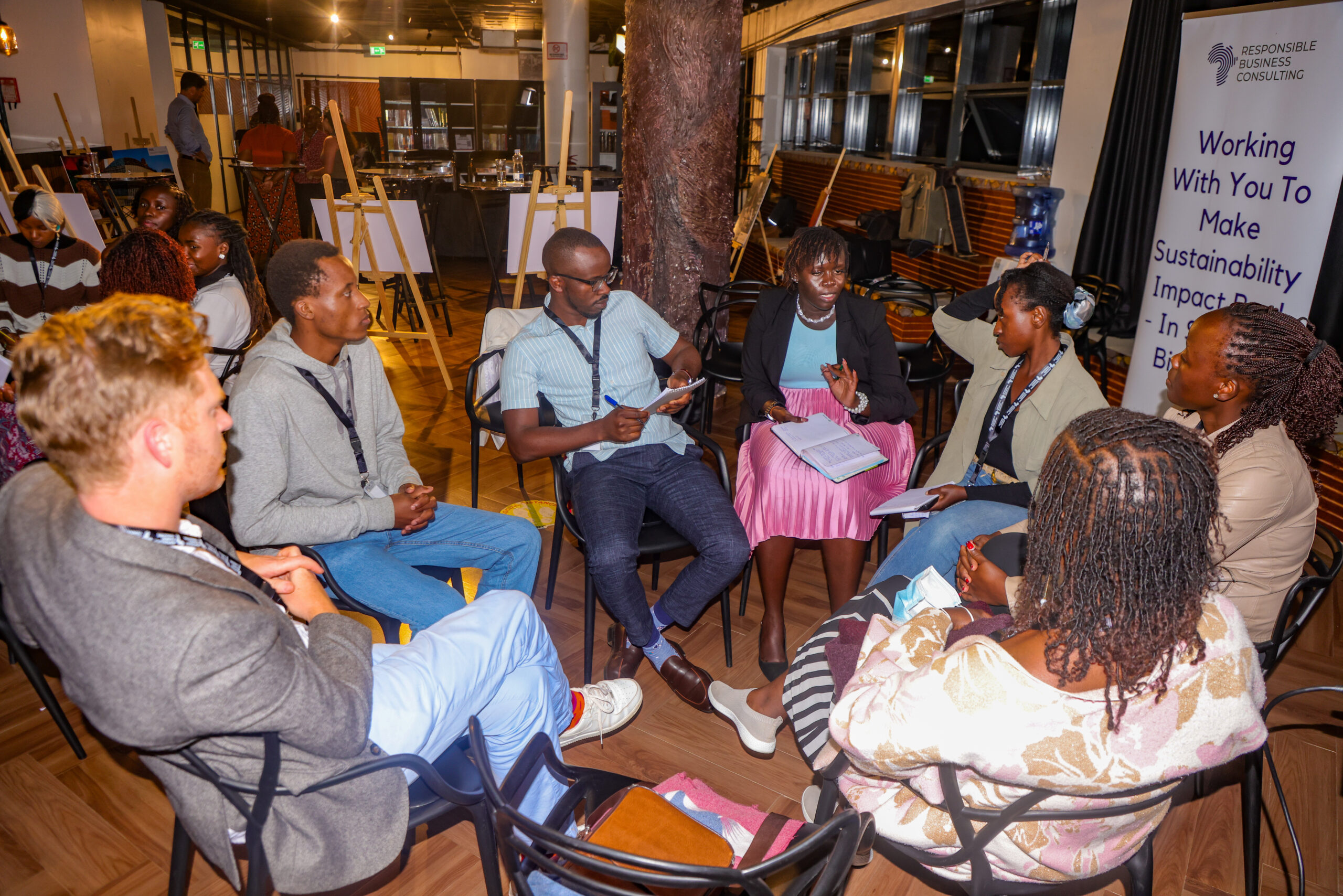
Question: How can companies maintain integrity in their sustainability commitments while dealing with the reality of rising complexity and competing demands?
- Define Sustainability Commitments Clearly
Companies should begin by clearly defining what their sustainability commitments actually are. If commitments are vague, it becomes difficult to uphold them with integrity or hold anyone accountable for them. - Embed Sustainability in the Purpose of the Business
Sustainability should not sit on the side as a separate idea. It needs to be embedded in the purpose of the company so that it shapes decisions more naturally, even when demands are competing. - Comply with Basic Legal Requirements
One point raised was that companies must at the very least comply with the law. Legal compliance is a basic starting point and forms part of maintaining integrity in sustainability practice. - Communicate Commitments Clearly Internally and Externally
The group emphasized the need to communicate sustainability commitments clearly within the organization and also to stakeholders. Everyone should understand what the company has committed to and what those commitments mean in practice. - Communicate Values Across All Levels
Values should be communicated just as clearly to the board as to the lowest level of the organization. Integrity is harder to maintain when expectations are only understood at the top and not throughout the institution. - Role Modelling Matters
Leaders and decision-makers need to model the commitments they expect others to follow. Sustainability commitments gain credibility when they are visibly lived out, not only stated. - Set Clear KPIs on the Commitments
The group noted the importance of setting measurable KPIs around sustainability commitments. For example, if a company says it will reduce its carbon footprint, it should state by how much and within what period. - Know Which Frameworks and Metrics Apply to the Business
Companies need to understand which sustainability frameworks and metrics are relevant to their own business. This helps avoid vague reporting and ensures that progress is being assessed in a way that fits the nature of the organization. - Put in Place Accountability Mechanisms
There was strong emphasis on having accountability mechanisms. These help companies deal with the reality of complexity and keep sustainability commitments from becoming empty statements. - Monitor Commitments and Progress
The accountability mechanisms should help monitor the commitments and track progress toward them. This allows the company to see whether it is moving in the right direction or falling behind. - Track and Evaluate Implementation
The group also highlighted the need to track and evaluate implementation continuously. This includes assessing whether the commitments are actually being carried through in practice. - Take into Account Both Positive and Negative Feedback
In tracking implementation, companies should consider both the positive and the negative. Honest evaluation is important if integrity is to be maintained. - Gauge Progress and Engage With It
The discussion also pointed to the need to gauge the progress being made and actively engage with what the findings are showing, rather than collecting information and leaving it unused. - Give Reasons for Failure and Success
Where targets are met or missed, companies should be able to explain why. Giving reasons for both failure and success helps strengthen transparency and learning. - Ensure the Results Hold Integrity
It was also noted that the results themselves must hold integrity. In other words, companies should not only produce results, but ensure those results are credible, honest, and aligned with what was actually committed. - Be More Transparent
Transparency was raised as an important part of sustaining integrity. Being more transparent helps build trust, stronger bonds, and a sense of shared ownership or shared stake in the commitments. - Have Clearly Defined Consequences and Corrective Actions
The group stressed that there must be clearly defined consequences and corrective actions where commitments are breached. Without consequences, there is a real risk that those commitments will simply sit on a shelf and nobody will care about them.
Group 2: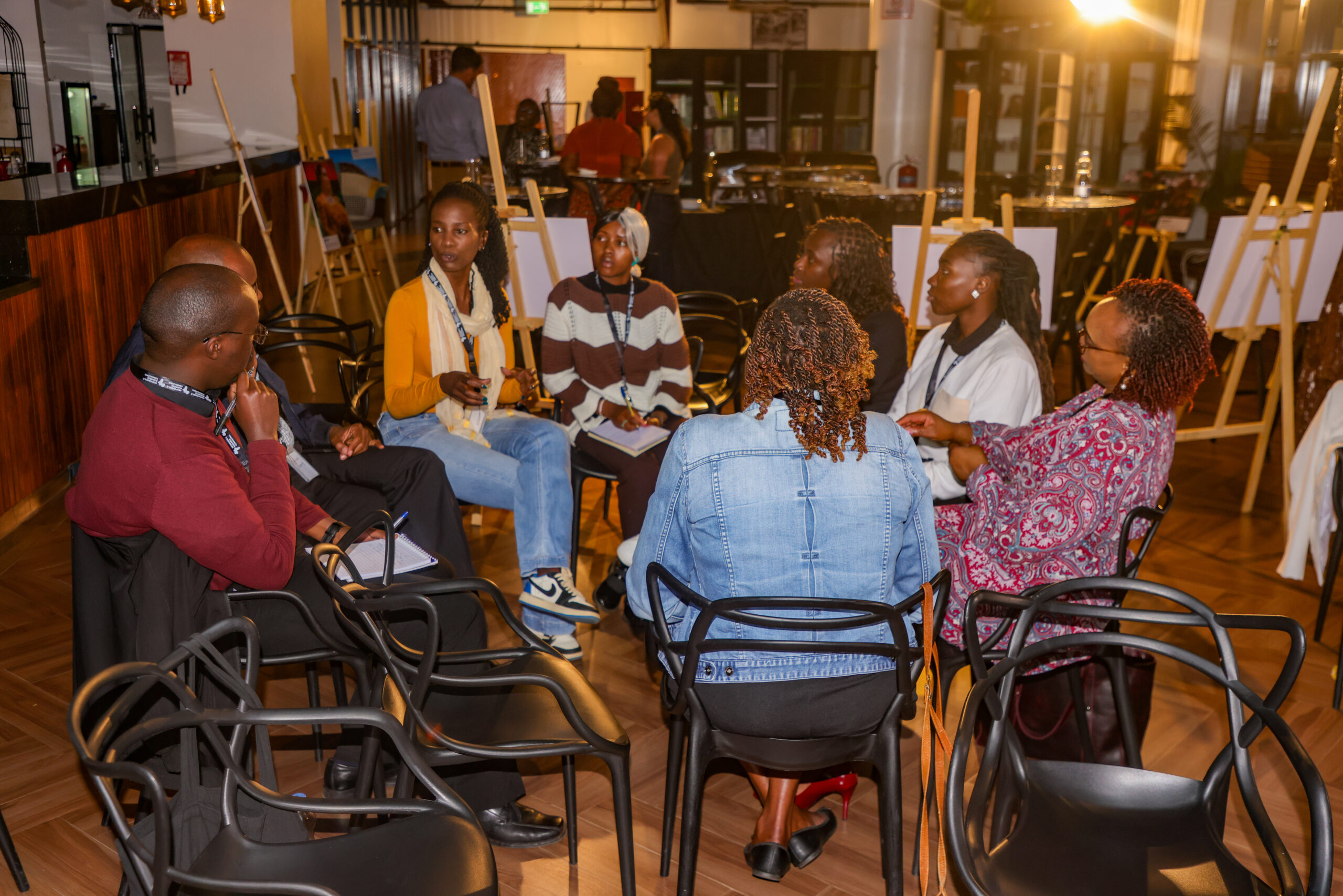
Question: What is needed to create an organisational culture that is ethical and based on integrity?
- Start from the Top and Cascade Down
The group observed that an ethical culture must start from the board and leadership level and flow through to the rest of the organisation. The tone set at the top influences what is normalised, what is rewarded, and what becomes part of everyday practice at every other level. - Leadership Must Model the Culture
It was emphasized that leaders at the highest level must model what they expect others to practice at the lowest level. Ethical culture is strengthened when people see that leadership is living out the same standards it is asking others to uphold. - Leadership Should Be Living According to the Vision and Purpose
One point raised was that leaders must be seen to live according to the organisation’s intended vision and purpose. Integrity becomes difficult to sustain if those entrusted with leadership are not aligned with what the organisation says it stands for. - Communication Is Essential
The group highlighted communication as a critical requirement. Ethical culture cannot be built where values, expectations, and standards are not clearly and consistently communicated across the organisation. - Create Space for Freedom of Expression and Discussion
It was noted that where culture is weak or not clearly established, there needs to be freedom of expression and discussion. People should be able to speak, raise concerns, and engage openly if ethical culture is to take root meaningfully. - Be Clear on What the Organisation Stands For
The group stressed the need to decide clearly what the organisation requires and stands for. Clarity on what is expected helps shape culture and can also influence performance positively. - Have Strong Systems, Charters, and Policies
A major point shared was that systems, charters, and policies need to be very clear. The group described this as being of utmost necessity, because ethical culture needs structures that guide behaviour and support consistency. - Use Clear Mechanisms to Support the Culture
The discussion pointed to the importance of mechanisms that reinforce the culture in practical ways. These mechanisms help translate ethical expectations from principle into day-to-day organisational practice. - Consider Whether Values Can Be Taught and Reinforced
The group raised the question of whether values can be taught, even later in a person’s career or life. This reflected the view that ethical culture may require deliberate learning, reinforcement, and continuous shaping, rather than assuming people automatically embody the desired values. - Establish Ethics and Values at the Recruitment Stage
It was suggested that ethics and value systems should begin to be established at the interview and recruitment stage. This means organisations should not wait until after hiring to begin addressing integrity and ethical expectations. - Carry Out Due Diligence in Recruitment
Related to recruitment, the group emphasized the need for due diligence. Careful screening at entry level helps organisations bring in people who are more likely to align with the culture they want to build. - Put Controls in Place
The group also highlighted the need for controls. Ethical culture is supported by practical safeguards that guide conduct and reduce room for compromise. - Address Conflict of Interest with Integrity
Conflict of interest was specifically mentioned as something that must be managed with integrity. This means not only recognising such situations, but handling them transparently and responsibly. - Require Declaration of Conflicts
One practical recommendation was declaration. People should be required to declare conflicts of interest so that these can be addressed early. - Use Checks and Balances to Eliminate Conflicts Early
The group stressed the need for checks and balances to identify and deal with conflicts early on. These systems help prevent issues from growing and help protect the organisation’s integrity. - Work Within Proper Reporting Frameworks
Proper reporting frameworks were also mentioned as necessary. These provide structure, strengthen accountability, and help ensure that concerns and issues are handled appropriately. - Make Transparency a Standard
Transparency was identified as something that must be standard rather than optional. A culture based on integrity requires openness in how decisions are made, how issues are handled, and how people are held accountable. - Support Security Within the System
Security was also mentioned as part of the discussion. This suggests the need for systems that make people feel protected within the organisational environment as ethical standards are implemented and maintained.
Group 3: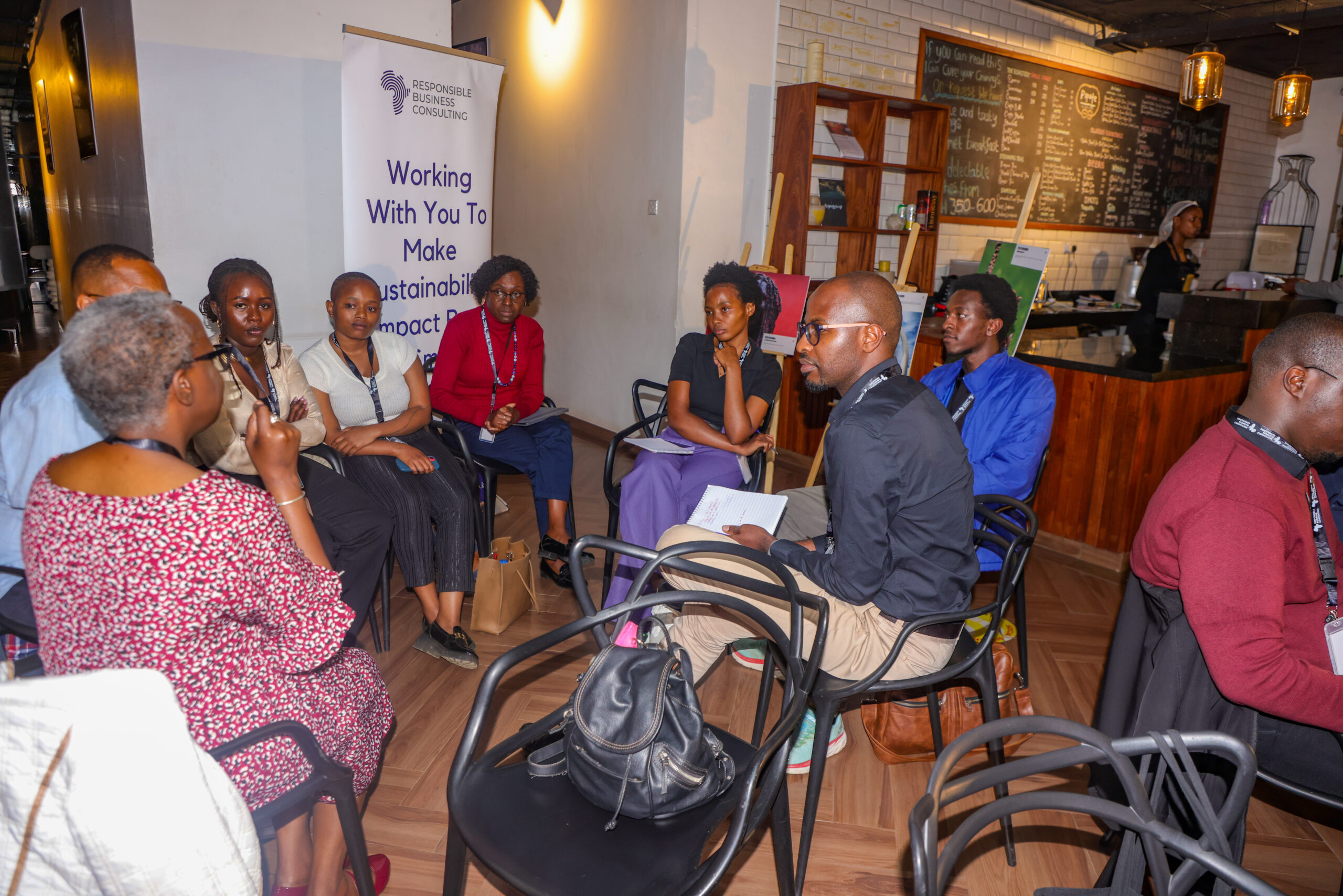
Question: What would it take, practically, to build a workplace where people feel safe and genuinely empowered to speak up against unethical behaviour? What is one thing your organisation could do tomorrow?
-
- Have Leadership Speak Transparently About Decisions
The group emphasized that leadership should speak openly and transparently about decisions. When leaders model openness, it creates trust and helps employees feel that concerns can be raised in a workplace where issues are not hidden or dismissed. - Put Clear Policies and Standards in Place
It was noted that organizations need clear policies about the standards expected. This helps ensure that when someone raises an issue, they are not seen as speaking against a person, but rather speaking in reference to an already established standard. - Anchor Reporting in Existing Standards
Related to this, the group pointed out that employees should be able to raise concerns because there is already a known standard in place. This makes reporting more objective and helps reduce the idea that a report is merely personal or targeted. - Have a Clear Reporting Structure
The discussion highlighted the need for a structure through which concerns can be communicated. A workplace cannot expect people to speak up confidently if there is no clear process showing where, how, and through whom issues should be raised. - Create Different Reporting Avenues for Different Types of Incidents
The group recommended having avenues suited to different kinds of incidents. Not all matters are the same, so organizations should design reporting channels that respond appropriately to the nature and sensitivity of each case. - Ensure Reporting Mechanisms Do Not Victimize People
A major point raised was that the reporting process must not victimize the person who comes forward. If people believe they will suffer for reporting unethical behaviour, they are far less likely to speak up. - Allow Anonymous Reporting Where Appropriate
The group also noted the value of anonymous reporting. Giving people the option to report anonymously can help reduce fear, lower bias around the report, and make it easier for individuals to come forward, especially in sensitive situations. - Communicate When Open Reporting Is Necessary
At the same time, it was suggested that organizations should also communicate why some matters may need to be raised openly. Where open reporting is necessary, employees should understand why that is the case and how it will be handled. - Elaborate the Procedures That Follow a Report
The group stressed the importance of clearly elaborating the procedures that will be applied once an issue is reported. People are more likely to speak up when they know what will happen next and when the process does not feel uncertain or arbitrary. - Make the Process Considerate to the Person Reporting
It was further noted that the system should be considerate of the person who wants to report. The organization should think through the experience of the reporter and ensure that the process is not intimidating, confusing, or unfair. - Think Through How the Process Will Be Handled
Finally, the group emphasized the need to think carefully about how the reporting process itself will be handled from beginning to end. A safe speaking-up culture depends not only on encouraging people to report, but also on having a fair, thoughtful, and credible process for receiving, reviewing, and acting on what is raised.
- Have Leadership Speak Transparently About Decisions
- Part 2: One thing the organisation could do tomorrow
-
- Involve Staff More in the Process
One practical step organizations could take immediately is to involve staff more intentionally in the process. The group noted that creating a safe and ethical workplace cannot remain only at policy or leadership level; staff need to feel included in how systems, communication, and reporting processes are shaped. Greater staff involvement can help build trust, improve clarity, and make people feel that the structures in place are not being imposed on them, but are being built with them in mind.
- Involve Staff More in the Process
- KEY TAKEAWAYS FROM THE ‘RBC SUSTY DIALOGUE SERIES’ – EDITION SEVEN
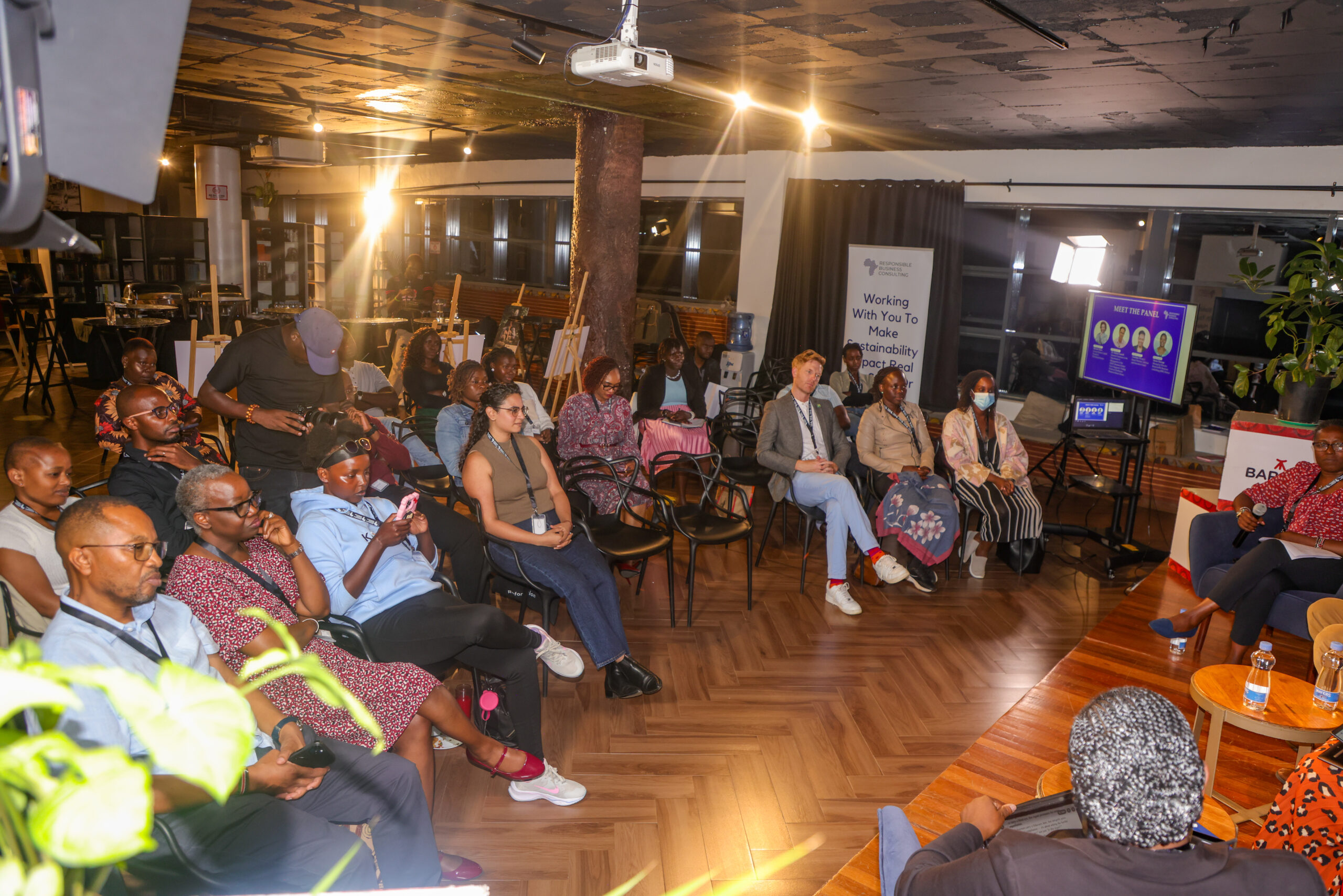 The evening closed with a demanding but clarifying message: doing the right thing in business is easy to admire in principle, but far harder when pressure, fear, power, convenience, and competing demands are involved. From Susan Njoroge’s opening reflections on bribery and personal choice to the panelists’ closing calls for self-examination, the dialogue returned to one core truth: ethics is tested precisely when something is at stake. This edition did not treat integrity as a polished value statement. It treated it as a daily discipline, a lived tension, and a practical responsibility for individuals, leaders, boards, and organisations.
In their final reflections, the panelists brought the evening back to its human core. Caroline Okong’o underscored that ethics and integrity ultimately depend on people, good governance, and the deliberate rewarding of right behaviour. Nkirote Njiru reminded participants that organisations are, at heart, human systems, and that the real work of leadership is not only to design products and processes, but to shape systems that uphold dignity, voice, fairness, and care, beginning first with leading self and then leading others with clarity. Dr. Stefan Groschl, meanwhile, returned the discussion to the individual, rejecting any comfort with corruption and inviting the room into deeper reflection on what they are living for and whether the work to which they are giving their lives truly aligns with their values.
This seventh edition of the RBC Susty Dialogue Series was more than a discussion about compliance. Under the theme “Doing The Right Thing – Ethics and Integrity in Business,” the evening explored how ethics shows up in hiring, promotion, governance, whistleblowing, board decisions, public disclosure, culture, and the systems organisations build or fail to build. It asked not only what people say they value, but what they reward, tolerate, confront, protect, or quietly allow to continue. That was the heartbeat of the night.
From the panel conversation to the audience engagement and breakout sessions, the room kept circling back to a sobering reality: integrity is not private. It shapes trust, reputation, leadership, organisational health, and long-term credibility. The discussion stretched from moral responsibility and personal ambition to governance, moral disengagement, corruption, whistleblowing, employee empowerment, and the need for clear behavioural standards. Below are the key takeaways that shaped the evening’s dialogue:
- Ethics Begins With Questions of Right and Wrong
Ethics was framed not as an abstract theory, but as the practical work of asking what is right or wrong, good or bad, and what kind of decision one is making. Integrity, in turn, was described as honesty, authenticity, trustworthiness, and the alignment of behaviour with values. - Integrity Becomes Visible When Something Is at Stake
A recurring message throughout the evening was that values are easiest to claim when nothing is being lost. Integrity becomes clearer when a person must choose between convenience and conviction, comfort and courage, silence and accountability. That is where ethics stops being theory and becomes practice. - Organisational Culture Is Revealed in Everyday Decisions
One of the sharpest insights of the evening was that culture is often not broken; it is operating exactly as designed. Ethics shows up in who gets hired, who gets promoted, how complaints are handled, whether managers confront or cover up wrongdoing, and what organisations quietly reward or tolerate. - Leadership and Governance Set the Ethical Tone
The panel stressed that ethics starts at the individual level, but it does not remain there. At board and leadership level, integrity carries responsibility, influence, and liability. Governance was presented as more than formal oversight; it includes frameworks, procedures, whistleblowing mechanisms, anti-corruption measures, checks, and the willingness to implement them credibly. - Purpose Shapes Ethical Direction
A powerful strand in the discussion asked deeper questions: why does an organisation exist, and what does an individual live for? The panel suggested that when profitability becomes the end in itself, it can begin to justify almost any means. But when organisations define themselves around wider responsibilities, profit is repositioned as a means rather than the ultimate moral compass. - Values Must Be Defined, Translated, and Lived
The evening made it clear that broad value statements are not enough. Organisations may say they value integrity, decency, or transparency, yet contradict themselves in practice. Audience reflections reinforced that values must be translated into expected behaviours clearly enough for everyone in the organisation to understand. - Ethical Systems Require Intentional Design
Several contributions showed that ethical organisations do not emerge by chance. They are built intentionally through people systems, onboarding, scorecards, confidential reporting channels, visible investigations, consistent consequences, and leadership communication that goes beyond process into principle. - Speaking Up Depends on Safety, Clarity, and Structure
The breakout discussions emphasized that a speak-up culture requires more than encouragement. Employees need clear standards, reporting structures, multiple channels suited to different incidents, protections against victimisation, options for anonymity where appropriate, and transparent procedures for what happens after a report is made. - Sustainability Commitments Need Integrity Too
The first breakout group showed that ethics is also central to sustainability work. Companies were urged to define their sustainability commitments clearly, embed them in organisational purpose, communicate them internally and externally, set measurable KPIs, understand relevant metrics and frameworks, and track both progress and setbacks. - Ethical Culture Must Be Built Across the Whole Organisation
The second breakout group reinforced that ethical culture starts from the top but must reach the whole institution. It requires communication, strong systems, role modelling, freedom of expression, clear policies, recruitment due diligence, conflict-of-interest declarations, checks and balances, reporting frameworks, transparency, and security within the system. - Broken Contexts Do Not Remove Responsibility
The dialogue did not ignore the social context of corruption, weak systems, and normalised compromise. Yet the panel pushed back against the idea that difficult environments remove ethical responsibility. Organisations were encouraged to focus on what they can control: stronger standards, transparent choices, employee empowerment, and refusing to leave individuals alone to carry the weight of broken systems. - Ethics Is a Form of Capital
One of the most memorable ideas of the night was that ethics and integrity are not private matters. They are reputation capital, social capital, leadership capital, and institutional capital. Their value may not always be visible immediately, but sooner or later they are tested. - The Real Work of Leadership Is Human
In the closing reflections, the panelists brought the conversation back to people. Another panelist underscored the importance of good people, good governance, and rewarding right behaviour. A panelist reminded the room that organisations are human systems, and that leadership must design for dignity, voice, fairness, and care. - Doing the Right Thing Must Become Daily Practice
By the close of the evening, the message was unmistakable: doing the right thing is not a slogan, a report, or a one-off declaration. It is a choice repeated in systems, policies, governance, reporting channels, leadership conduct, and personal decisions, especially when no one is watching. The invitation was both individual and collective: to build organisations where integrity is clear, culture is intentional, and ethics is practiced consistently enough to be trusted.
Susan’s closing remarks left the audience with further work to do. She described ethics as a continually testing and evolving topic, not one that can be settled once and forgotten. She pointed participants to the report discussed in the room and drew attention to the troubling indication that some young people between 18 and 24 would be willing to engage in corruption, underscoring the urgency of showing more clearly what doing the right thing looks like in practice. The evening then closed on a symbolic note, with the presenters being gifted trees, an ending that quietly echoed the event’s wider call for rooted values, long-term thinking, and responsibility that grows over time. It was a reflective ending to a rigorous conversation.